MISSION PROTOCOL: NYX DEMO SECURES ARIANE 6 DEPLOYMENT
Franco-German startup The Exploration Company has finalized a launch agreement for its Nyx Earth capsule, booking a slot on a future Ariane 6 mission to validate its orbital logistics capabilities.
# STATUS: LOGISTICS EXPANSION
The Exploration Company (TEC) has formally integrated its Nyx Earth demonstration mission into the Ariane 6 manifest. According to European Spaceflight, this booking represents a significant technical milestone for the Franco-German venture as it moves to validate its reusable spacecraft architecture.
TECHNICAL OBJECTIVES
Nyx Earth serves as a technology demonstrator for the firm’s larger vision: a reusable orbital vehicle capable of ferrying cargo to the International Space Station (ISS) and future commercial orbital habitats. The upcoming flight is designed to test critical subsystems, including thermal protection, orbital maneuvering, and atmospheric reentry hardware. Success here is mandatory for the eventual deployment of the full-scale Nyx capsule, which aims to provide Europe with an independent, commercial return-to-Earth capability.
LAUNCH ARCHITECTURE
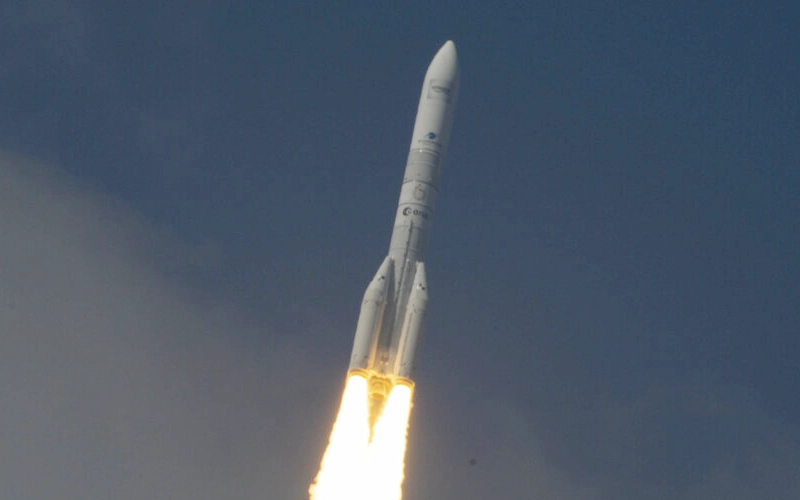
The mission will utilize Arianespace’s heavy-lift Ariane 6 vehicle. While specific orbital parameters remain classified by mission priority, the flight will focus on high-fidelity telemetry gathering and post-reentry recovery procedures. By choosing the Ariane 6, TEC aligns itself with the core of European sovereign launch capacity, ensuring that the mission’s logistical chain remains entirely within the continental ecosystem.
OPERATIONAL OUTLOOK
This contract is not merely a flight test; it is a signal of intent. The Exploration Company is positioning itself to be a primary logistical backbone for the post-ISS era. With this booking, the transition from theoretical engineering to orbital hardware is now locked into the flight schedule. The mission will serve as the baseline for all subsequent Nyx iterations, establishing the performance parameters required for human-rated logistics in the next decade.