Martian Moons: NASA Partners for MMX Sample Return Mission
NASA joins forces with the JAXA-led Martian Moons eXploration (MMX) mission, providing critical instrumentation to resolve the origin enigmas of Phobos and Deimos.
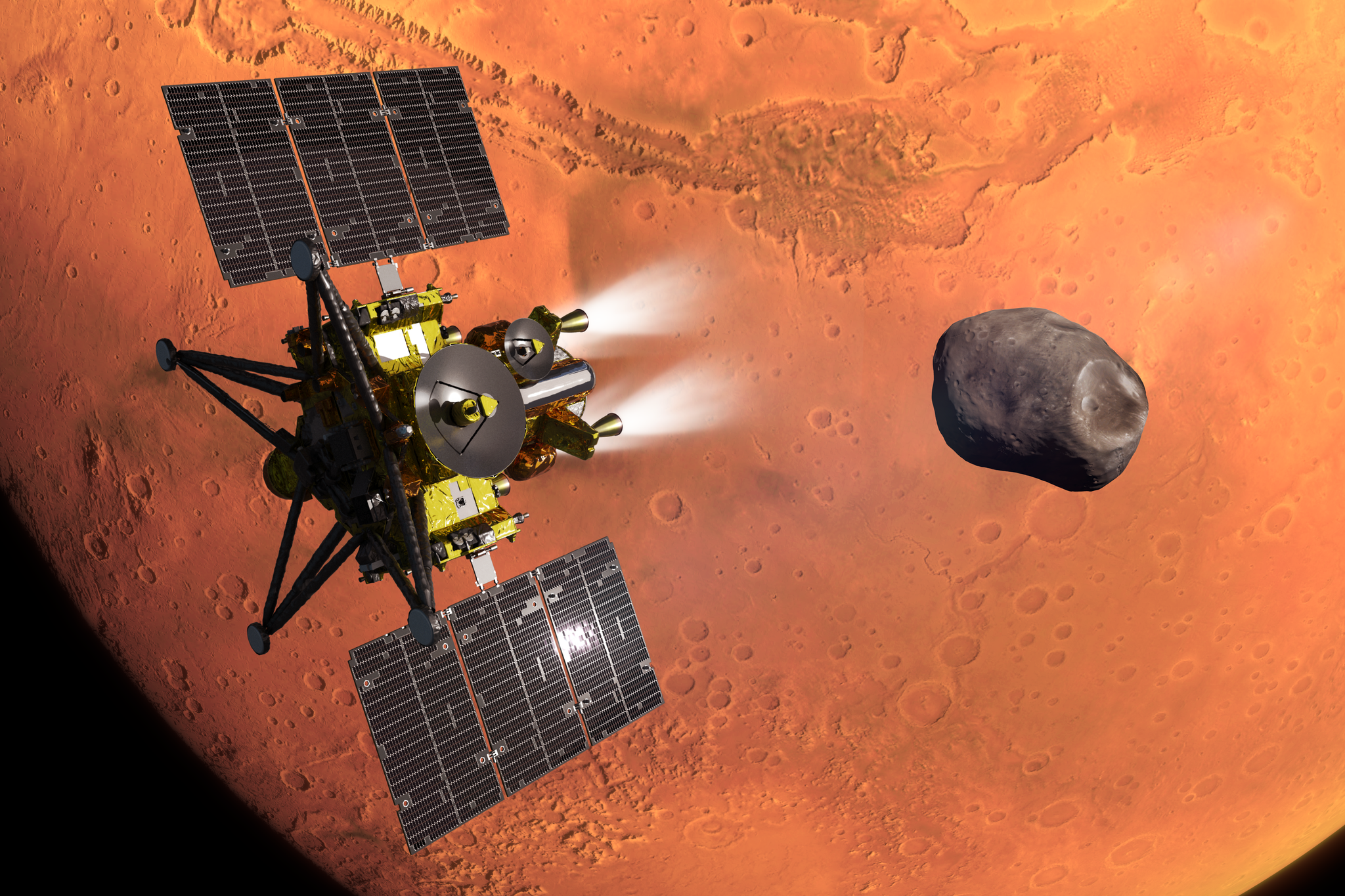
# MMX: Resolving the Martian Satellite Enigma
Deep-space data confirms a new phase of collaboration between NASA and the Japan Aerospace Exploration Agency (JAXA). According to NASA Breaking News, the American agency is set to provide key scientific instrumentation for the upcoming Martian Moons eXploration (MMX) mission. The primary objective: determining whether Phobos and Deimos are captured asteroids or the remnants of a high-velocity impact with the Martian surface.
The Mission Profile
The MMX spacecraft is scheduled to orbit both Martian satellites before executing a complex landing maneuver on Phobos. Unlike previous flyby missions, MMX will retrieve a physical sample from the moon's surface for return to Earth. NASA’s contribution includes the MEGANE instrument—a gamma-ray and neutron spectrometer designed to map the elemental composition of the moons—and a pneumatic sampling device.
Strategic Objectives
Data gathered from the mission will provide terminal clarity on the evolution of the Martian system. If the moons are captured asteroids, they represent a delivery mechanism for water and organic matter to the inner solar system. Conversely, if they formed via impact, they offer a geological record of the early Martian crust. This data is critical for refining orbital landing protocols and resource mapping for future crewed excursions to the Red Planet.
NASA’s involvement extends beyond hardware; the agency will also support the mission’s navigation and deep-space communications through the Deep Space Network. The integration of international assets marks a significant step in standardized planetary defense and exploration protocols.