Mapping the Unseen: Simulated Dark Matter Scaffolding Revealed
New astrophysical simulations released via NASA's Astronomy Picture of the Day illustrate the invisible dark matter filaments that dictate the structure of the cosmos.
# Data Feed: Universal Scaffolding Analysis
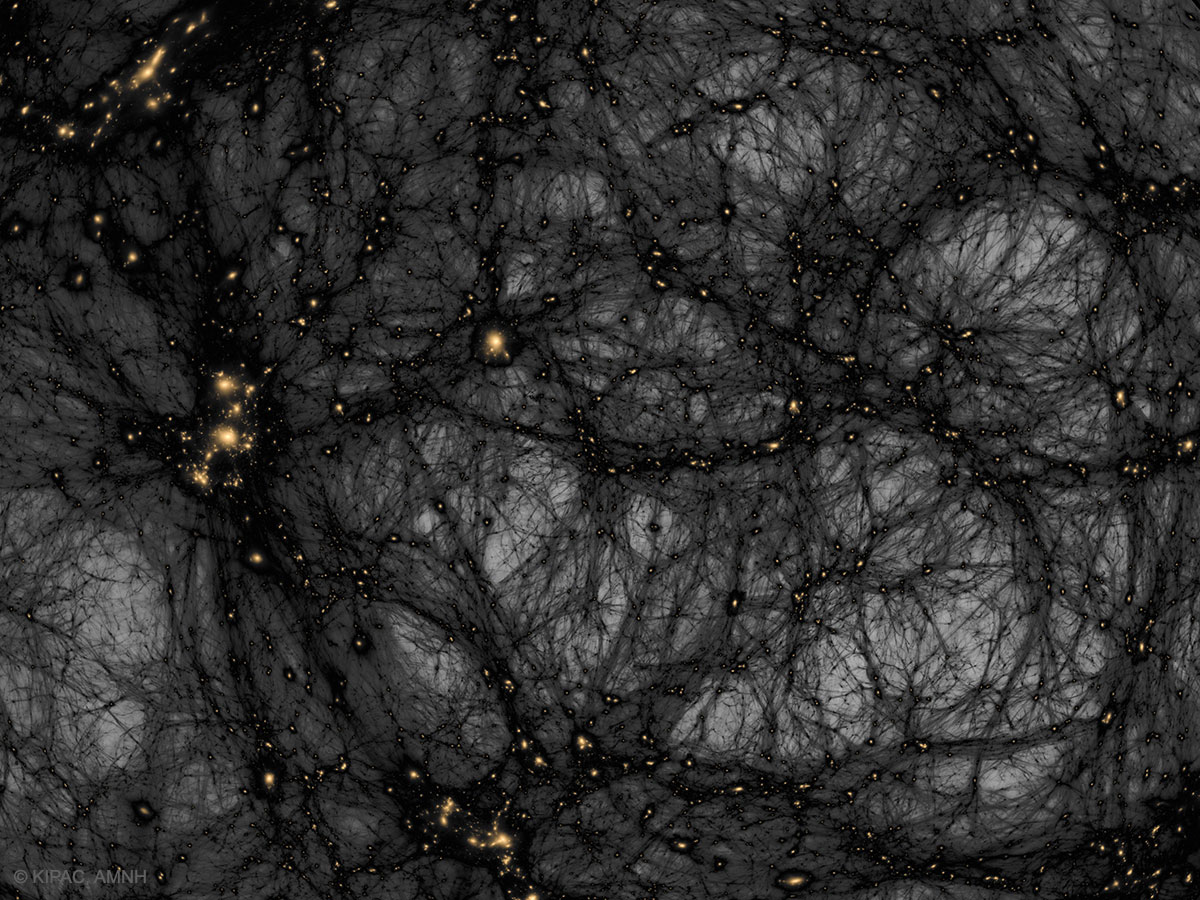
Recent visualizations provided by NASA’s Astronomy Picture of the Day (APOD) for October 25, 2026, offer a high-resolution look into the gravitational foundations of our reality. The simulation data maps the distribution of dark matter—the elusive, non-baryonic substance that constitutes the vast majority of the universe's mass yet remains invisible to electromagnetic detection.
According to NASA Breaking News, these sophisticated models demonstrate how dark matter acts as a gravitational blueprint. The simulated universe reveals a complex network of filaments, often referred to as the "cosmic web." These invisible strands pull ordinary matter—gas, dust, and stars—into their gravitational wells, facilitating the formation of galaxies and large-scale structures over billions of years.
Strategic Monitoring
The release of this simulation coincides with critical milestones for several orbital assets. While the James Webb Space Telescope (JWST) continues to probe the early universe, the Nancy Grace Roman Space Telescope is currently entering its final commissioning phase. The Roman mission is specifically designed to investigate the nature of dark energy and dark matter with a field of view 100 times greater than Hubble's infrared instrument.
Mission Status Update
Beyond deep-space modeling, NASA reports significant activity across the solar system. The Psyche spacecraft is currently accelerating toward the main asteroid belt, while the Artemis program remains the primary vector for establishing a sustained human presence on the Moon. These operational realities, combined with simulated data of the cosmic web, provide a dual-track understanding of both our immediate orbital environment and the deep-time evolution of the vacuum.