Machine Intelligence Optimizes European Rocket Propulsion
ESA is leveraging artificial intelligence to streamline rocket manufacturing, moving from manual labor to automated, high-precision thermal protection systems.
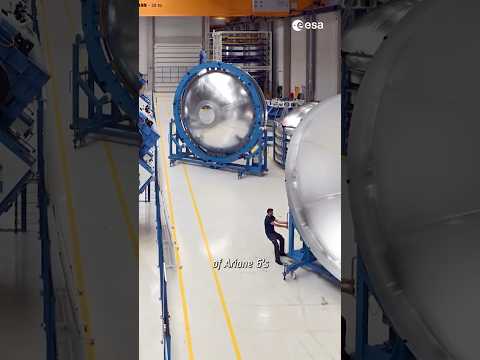
Neural Networks in the Fabrication Bay
The European Space Agency (ESA) is fundamentally altering its approach to launch vehicle production. According to a recent ESA YouTube update, the integration of Artificial Intelligence (AI) is no longer a theoretical pursuit but a practical tool for building superior rockets. Specifically, AI-driven systems are now being deployed to enhance the structural integrity and efficiency of propulsion systems.
Automated Thermal Insulation
A critical application involves the thermal protection systems required to safeguard rockets during high-velocity atmospheric transit and intense combustion phases. Previously, applying insulation materials—such as those on the upper stages—required extensive manual labor and subjective inspection. The new process utilizes automated robotic arms guided by real-time AI computer vision. This ensures a uniform application of protective layers, significantly reducing the margin of failure compared to human-led processes.
Precision Logistics and Rapid Iteration
AI impact extends to the design phase, where machine learning algorithms analyze vast datasets from previous launches to optimize aerodynamic profiles and weight distribution. By delegating data-heavy inspection tasks to neural networks, ESA engineers can focus on architecture rather than routine quality control. This transition toward 'smart manufacturing' accelerates the production cycle, ensuring that Europe remains competitive in an increasingly crowded orbital delivery market. Data-driven manufacturing is no longer an optional upgrade; it is the new baseline for European rocketry.