M88 TRAJECTORY: HUBBLE TRACKS SPIRAL GALAXY IN VIRGO CLUSTER
The Hubble Space Telescope has documented the spiral galaxy M88 as it accelerates toward the center of the Virgo Cluster, undergoing significant morphological stress.
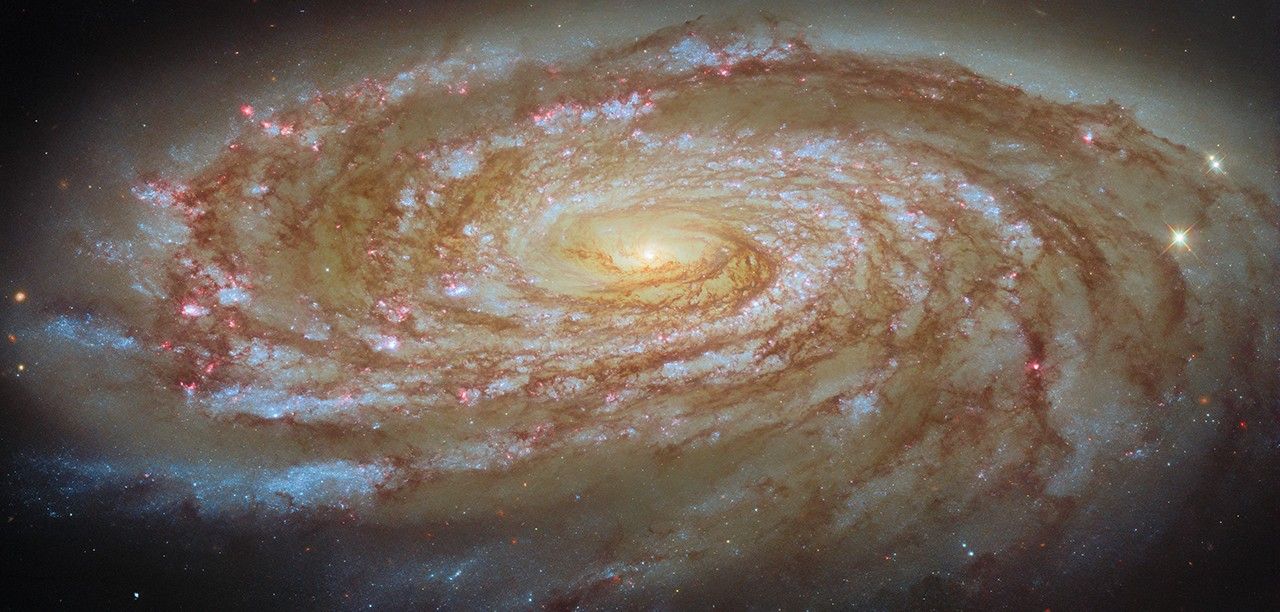
DATA ACQUISITION: HUBBLE OBSERVATORY REPORT
New imaging data from the Hubble Space Telescope confirms the spiral galaxy M88 is currently on a high-velocity transit toward the gravitational epicenter of the Virgo Cluster. Located approximately 50 to 60 million light-years from Earth, M88 is one of approximately 1,300 to 2,000 galaxies inhabiting this massive local structure.
According to NASA Breaking News, the galaxy’s trajectory is causing significant atmospheric and structural interaction. As M88 moves through the dense intergalactic medium of the cluster, it experiences a phenomenon known as ram pressure stripping. This process occurs as the "wind" of hot intra-cluster gas pushes against the galaxy’s own internal gas and dust, effectively siphoning off the raw materials required for future star formation.
Despite this environmental pressure, Hubble’s Wide Field Camera 3 (WFC3) reveals the galaxy’s well-defined spiral arms and a luminous core. M88 is classified as a Seyfert galaxy, characterized by an exceptionally bright nucleus powered by a central supermassive black hole. The latest telemetry highlights the cyclical nature of galactic evolution: while M88 remains a prolific site for current star production, its ongoing descent into the cluster core may eventually deplete its reproductive capacity, transforming it into a quiescent system.