M30: The High-Density Interior of a Galactic Fossil
New imaging data from the Hubble Space Telescope provides a deep-field look at the globular cluster M30, revealing a stellar population characterized by ancient age and high-velocity collisions.
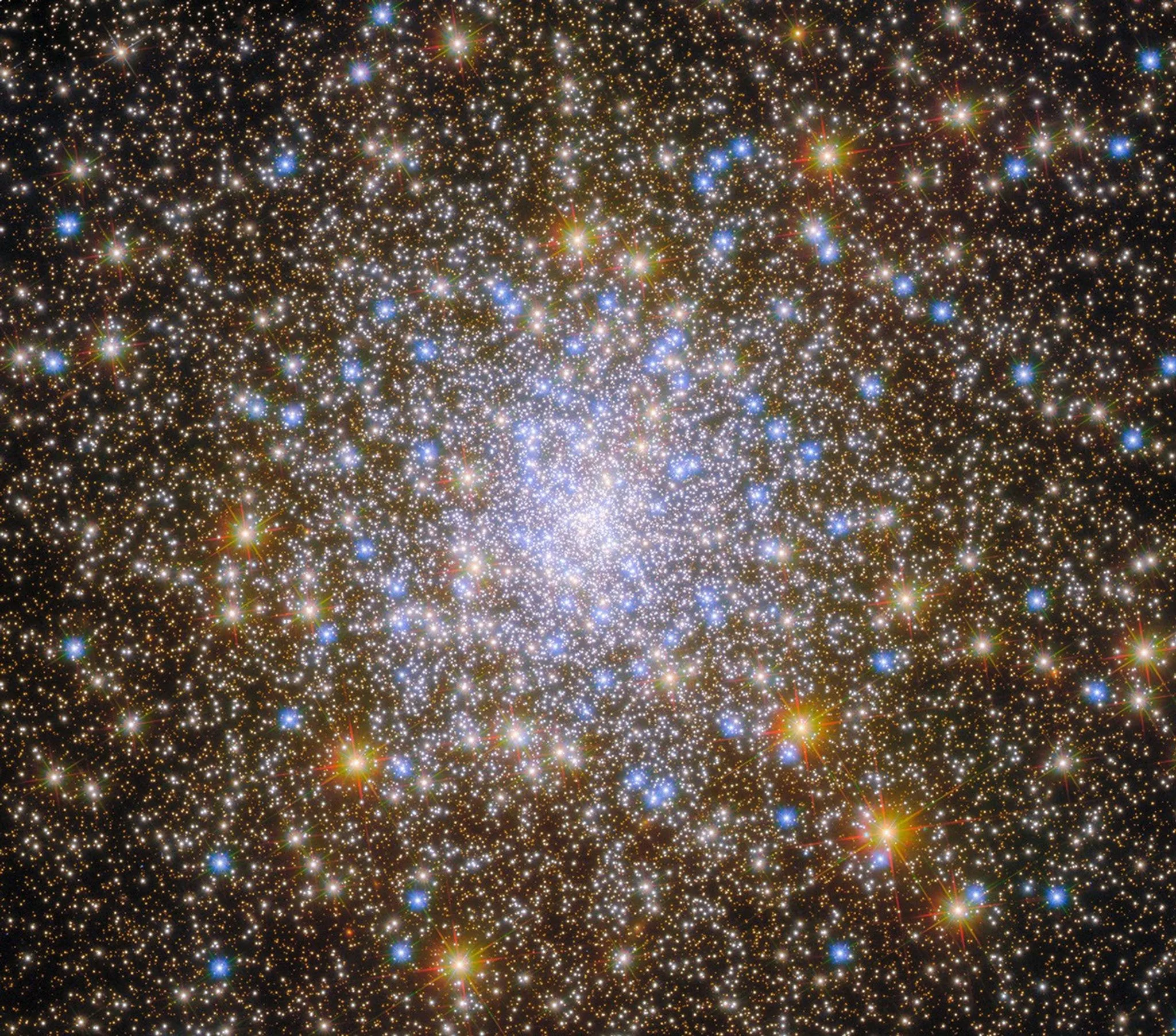
DATA FEED: STAR CLUSTER M30
The deep-space sensors of the Hubble Space Telescope have captured high-fidelity imagery of Messier 30 (M30), a globular cluster located approximately 28,000 light-years from Earth in the Capricornus constellation. According to NASA Breaking News, this stellar relic is one of the most ancient structures in the known universe, estimated at 13 billion years old—nearly the age of the galaxy itself.
//Structural Collapse
M30 is categorized as a "core-collapsed" cluster. Unlike typical globular clusters with uniform density gradients, M30 has undergone a gravitational transition where stars have migrated inward, creating an extremely dense, luminous central core. This phenomenon occurs when stellar interactions drain kinetic energy from individual stars, causing them to fall toward the cluster's gravitational center.
//Blue Straggler Anomalies
The central density of M30 facilitates frequent stellar close-encounters and collisions. These events result in the formation of "blue stragglers"—stars that appear younger, hotter, and bluer than their peers. While standard stellar evolution suggests these stars should have exhausted their fuel long ago, the merger of two old stars effectively "resets" the clock, creating a rejuvenated, massive celestial body.
Hubble’s Wide Field Camera 3 (WFC3) resolved thousands of individual stars in this cluster, providing critical telemetry on how dense environments influence the life cycles of stars. For astrophysicists, M30 serves as a laboratory for studying the long-term gravitational evolution of fossil-system structures.