M104 Analysis: Tidal Streams Detected in Sombrero Galaxy
Deep-field imaging has identified faint stellar tidal streams surrounding M104, suggesting the iconic Sombrero Galaxy recently absorbed a smaller satellite system.
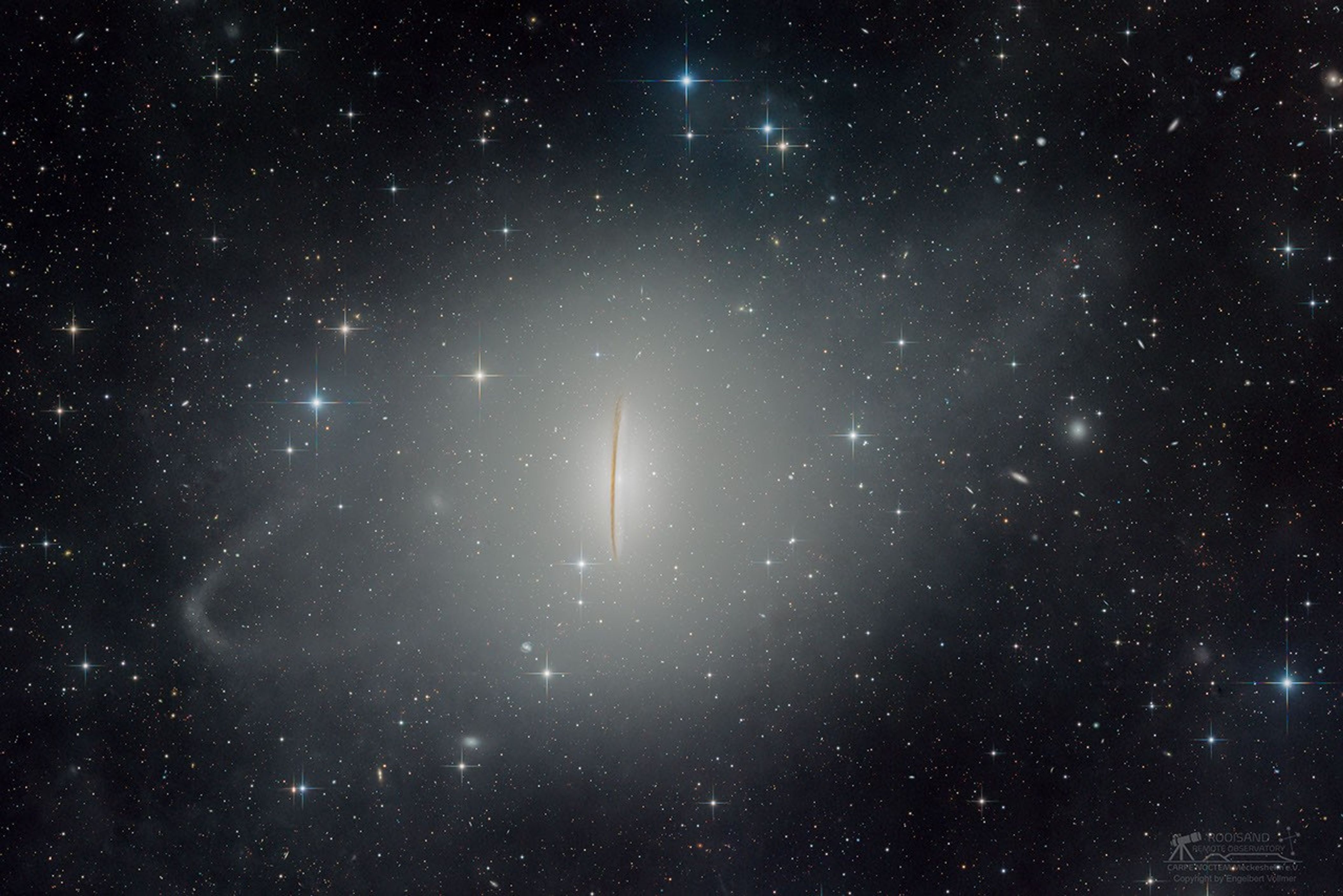
Galactic Reconnaissance: M104
New deep-field observations of the Sombrero Galaxy, designated M104, have revealed structural anomalies previously hidden by the system’s high-luminosity disk. According to NASA Breaking News, high-resolution imaging has confirmed the presence of faint, extended tidal streams of stars looping around the galaxy’s outer halo. These faint filaments are the definitive signatures of a past gravitational interaction.
The Mechanics of Accretion
The detection of these tidal streams suggests that M104 is not a static object but an active site of galactic cannibalism. The presence of these stellar trails indicates that the Sombrero Galaxy recently—in cosmological terms—absorbed a smaller satellite galaxy. As the smaller system was pulled into M104’s massive gravitational well, tidal forces tore it apart, scattering its constituent stars into the broad, looping arcs now visible to sensitive orbital and ground-based sensors.
Structural Implications
Typically recognized for its massive central bulge and sharp dust lane, M104’s newly mapped halo provides critical data on the evolution of isolated galaxies. While M104 appears relatively solitary compared to cluster-bound systems, these tidal streams prove that even seemingly stable galaxies are shaped by violent accretion events. The data reinforces the 'hierarchical model' of galaxy formation, where larger structures are built through the relentless consumption of smaller neighbors. Analysts suggest this discovery will require a recalibration of M104's mass distribution models and its projected evolutionary timeline.