Logistics Analysis: From French Soil to Orbital Plate
ESA astronaut Sophie Adenot oversees the complex certification and preparation of French 'bonus food' for her upcoming mission to the ISS.
Payload Specifications: Bonus Rations
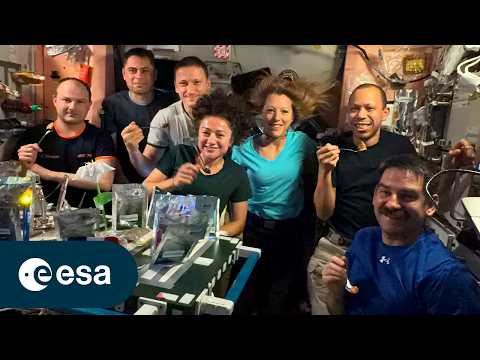
According to documentation released via the ESA YouTube channel, the logistical pipeline for Sophie Adenot’s orbital mission includes a specialized culinary component: French "bonus food." This category of cargo provides psychological support and nutritional variety beyond standard ISS rations, requiring a rigorous preparation cycle that begins months before launch.
Certification and Containment
The journey originates in France, where selected recipes undergo strict industrial processing to meet ESA safety standards. Every item must be shelf-stable for long-duration spaceflight, resistant to high-G launch forces, and processed to eliminate microbial risks. Crumbs are a primary hazard in microgravity environments; thus, textures are engineered to remain cohesive. The food is typically vacuum-sealed or tinned, ensuring no leakages occur within the station's closed atmospheric system.
Delivery Vector
Once certified, the inventory is transported to the European Astronaut Centre (EAC) and subsequently integrated into the cargo manifest of an automated resupply vehicle. This supply chain ensures that Adenot has access to culturally significant nourishment during her tenure on the International Space Station. The integration of high-quality French gastronomy serves not only as a caloric necessity but as a critical element of astronaut mental health and crew cohesion. Adenot’s involvement in the selection process highlights the personalized nature of modern mission planning, where technical precision meets human physiological requirements.