Loft Orbital Aggregates Hardware for High-Power Defense Missions
Loft Orbital is scaling its mission management model with the acquisition of 11 new satellite buses, signaling a strategic pivot toward larger, defense-oriented payloads.
Strategic Expansion into Heavy Payloads
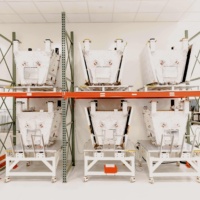
Loft Orbital is pivoting toward more intensive mission profiles, acquiring a new fleet of satellite buses to accommodate larger, power-hungry customer payloads. According to Payload, the procurement includes ten Longbow buses from Airbus Defence and Space and one Apex Nova bus, with an option for nine additional Nova units.
Scaling the Mission Manager Model
Operating on the premise that satellite hardware is becoming a commodity, Loft functions as a mission manager rather than a manufacturer. By providing the integration and operational layer between the payload and the bus, Loft has spent over $100M on third-party hardware since 2017.
This latest acquisition marks a significant shift upmarket. While Loft’s previous inventory focused on platforms supporting under 100 kg, the Apex Nova bus—which debuted on SpaceX’s Transporter-17—supports up to 300 kg and provides 1 kW of orbit-average power. This capability is specifically aimed at U.S. national security and defense sectors, where sovereign infrastructure is increasingly prioritized over simple data-buying agreements.
Fleet Trajectory
Loft COO Alex Greenberg confirms the company is transitioning from single-mission demonstrations to fleet-scale operations. After starting the year with six missions, Loft anticipates having 30 operational satellites in orbit by late 2025. Key upcoming projects include EarthDaily’s 10-satellite Earth observation constellation and the Altair constellation via the Orbitworks joint venture with UAE-based Marlan Space. Apex is scheduled to deliver the first Nova bus to Loft by October.