LEO Manufacturing: Bridging the Commercial Demand Gap
Despite the promise of microgravity manufacturing, the LEO market faces a critical demand shortage that requires strategic government intervention to resolve.
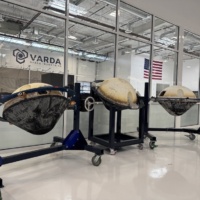
Current projections for the post-ISS Low Earth Orbit (LEO) economy indicate a dangerous stagnation. While NASA is shifting toward an incremental funding model for commercial space stations, the core issue remains a lack of industrial demand. According to Payload, the high-potential sector of in-space manufacturing—specifically in pharmaceuticals and semiconductors—is currently unable to sustain itself without robust state support.
The Infrastructure Deficit
The transition from experimental ISS science to scalable industrial production requires more than just modules. A hybrid architecture of orbital hubs and autonomous manufacturing nodes is necessary. However, US government signaling remains inconsistent. NASA’s FY27 budget request lacks explicit support for microgravity-based production, and regulatory bodies like the FDA have yet to establish clear approval pathways for space-manufactured therapeutics.
International Competition
While the US domestic policy lags, international players are moving to capture the market. The UK has recently established a cross-governmental framework to catalyze microgravity innovations. Simultaneously, global investment trends show the US share of space venture capital falling below 50% for the first time, with China and Europe aggressively closing the gap.
Policy Recommendations
To secure LEO’s economic viability, the public sector must act as a market primer. Key requirements include:
Regulatory Alignment: The FDA and health agencies must treat microgravity as a standard industrial environment.
Strategic Prioritization: Expanding the mission scope beyond NASA to include departments of health and defense to ensure economic security.
* Hardware Investment: Funding the infrastructure for uncrewed, autonomous production platforms where human presence is not required.
Without these interventions, the promise of LEO-grown retinas and advanced semiconductors may stall, leaving the orbital economy as an expensive, underutilized frontier.