Laser Logic: Evaluating the Shift to Optical Inter-Satellite Links
Optical Inter-Satellite Links (OISLs) are transforming orbital data architecture, but high costs and technical complexity keep traditional RF systems in the race.
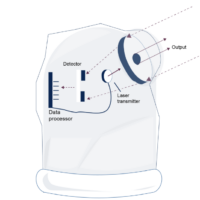
The Photon Pivot
Satellite operators are increasingly confronted with a binary choice in communication architecture: stick with legacy Radio Frequency (RF) or upgrade to Optical Inter-Satellite Links (OISLs). According to Payload, the shift toward laser-based communication is no longer a theoretical preference but a requirement for modern, high-bandwidth constellations.
Advantages: The High-Speed Backbone
The primary driver for OISL adoption is data throughput. Laser terminals can transmit massive datasets across orbital planes with significantly lower latency than ground-hop RF configurations. Furthermore, optical links provide a higher degree of security; their narrow beamwidths make signals nearly impossible to jam or intercept compared to the dispersed footprint of RF. For operators facing an increasingly crowded spectrum, optical systems bypass the regulatory hurdles of frequency licensing entirely.
Constraints: Precision and Price
Despite the performance gains, OISLs are not a universal solution. The complexity of "pointing, acquisition, and tracking" (PAT) remains a significant barrier. Maintaining a nanometer-precision lock between two platforms moving at orbital velocities requires sophisticated vibration isolation and high-end actuators.
Cost also remains a deterrent. While prices are dropping as manufacturing scales, an optical terminal is still a premium component. For small-scale missions or those with modest data requirements, the heritage and reliability of RF systems offer a more cost-effective risk profile.
Strategic Implementation
The decision to incorporate optical hardware currently hinges on the scale of the constellation. Large-scale LEO networks, such as Starlink or SDA’s Transport Layer, favor optical links to reduce reliance on global ground stations. Conversely, individual tech-demos or low-data sensors may find the mass and power overhead of OISLs unnecessary. Integration of laser terminals is a commitment to high-density data utility at the expense of simplicity.