LASER LINK: LITHUANIAN-GERMAN PARTNERSHIP EYES REENTRY CONNECTIVITY FIRST
Astrolight and ATMOS Space Cargo have announced a 2027 mission to demonstrate the first in-flight laser communication link between a reentry capsule and an orbiting satellite.
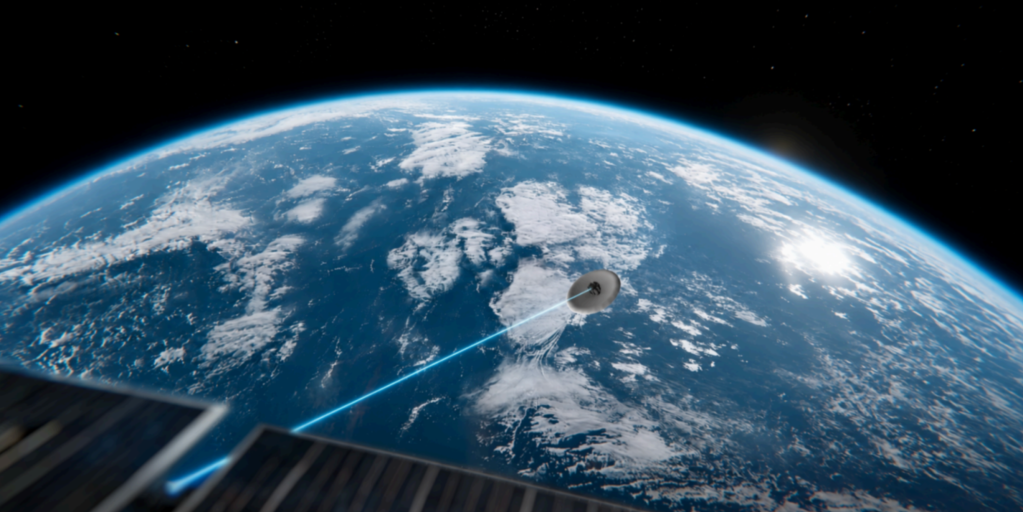
DATA LINK ESTABLISHED
Lithuanian optical specialist Astrolight has formalized a partnership with Germany’s ATMOS Space Cargo to bridge the communication gap during atmospheric return. According to SpaceNews, the duo signed a memorandum of understanding to execute the first-ever in-flight optical link between a reentry vehicle and a satellite, scheduled for 2027.
TECHNICAL PARAMETERS
The mission will utilize Astrolight’s ATLAS-X laser communication terminals. One unit will be integrated into the ATMOS PHOENIX reentry vehicle, while a second terminal will occupy a designated relay satellite. This configuration aims to bypass the limitations of traditional radio frequency (RF) systems, which are vulnerable to jamming and bandwidth constraints.
Key performance metrics for the demonstration include:
- Throughput: Real-time data transfer speeds up to 2.5 Gbps.
- Link Architecture: Direct spacecraft-to-satellite optical transmission.
- Resilience: Focused narrow-beam technology to prevent interception and signal interference.
STRATEGIC IMPLICATIONS
Astrolight CEO Laurynas Mačiulis noted that while these links have been simulated in laboratory environments, a space-based demonstration is essential for scaling autonomous cargo-return operations. Currently, Europe relies heavily on international partners for downmass capabilities. This project aligns with the European Space Agency’s (ESA) LEO Cargo Return Services Initiative, which seeks to establish independent European infrastructure for payload recovery.
As reentry missions become more data-intensive, the 100x speed increase offered by laser systems is viewed as a critical requirement for maintaining vehicle control and telemetry during the high-risk descent phase.