Kreios Space Taps NanoAvionics for VLEO Air-Breathing Engine Demo
Spanish startup Kreios Space has partnered with Kongsberg NanoAvionics to launch a 2028 demonstration mission for its air-breathing electric propulsion system in Very Low Earth Orbit.
Mission Parameters: Sub-LEO Validation
Spanish startup Kreios Space is moving to secure its position in the emerging Very Low Earth Orbit (VLEO) sector. According to Payload, the Madrid-based firm has selected Kongsberg NanoAvionics to provide the satellite bus for its inaugural technology demonstration, currently slated for a 2028 launch.
The mission centers on the validation of Kreios’ proprietary air-breathing electric propulsion (ABEP) system. Unlike traditional thrusters that carry heavy onboard propellant, AEP systems ingest residual atmospheric molecules from the thin upper atmosphere to generate thrust. This allows satellites to maintain altitude in high-drag environments—typically between 200 km and 350 km—without the weight penalties of conventional fuel.
Hardware and Flight Profile
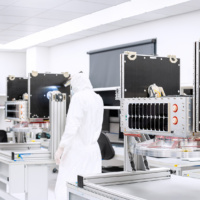
For the 2028 sortie, Kreios will utilize the flight-proven MP42 microsatellite bus from NanoAvionics. While the MP42 is not specifically hardened for the extreme drag of VLEO, the partnership allows Kreios to bypass the lengthy development cycle of a custom bus. The flight profile involves a deployment at 300–350 km, followed by a controlled drift toward Earth. During this descent, the ABEP thruster will fire at varying altitudes to map performance against atmospheric density. The mission is expected to last six to ten months and will host two additional undisclosed payloads.
The VLEO Arms Race
Kreios is entering a crowded theater. Competitors including the UK’s NewOrbit, India’s Bellatrix Aerospace (partnered with South Korea’s TelePIX), and the US-based Redwire are all developing rival ABEP technologies. Kreios CEO Adrián Senar told Payload that data harvested from this 2028 sprint will inform the design of a fully optimized, long-duration platform. The company aims to deploy a drag-compensated bus capable of sustained operations at 200 km by 2029.