Katalyst Space Stabilizes Link Servicer Following Critical Anomaly
Engineers have successfully reduced the rotation rate of the Link servicing spacecraft, keeping the high-stakes orbital reboost of NASA’s Swift observatory alive.
SYSTEM STATUS: PARTIAL RECOVERY
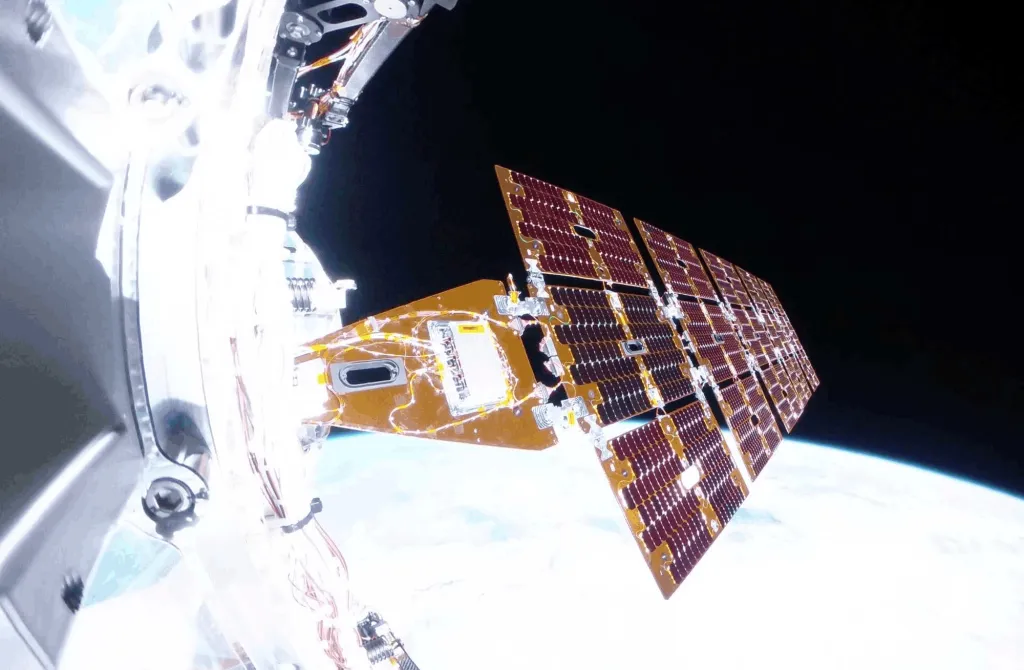
Katalyst Space Technologies is fighting to save its Link spacecraft after a critical attitude control failure following its July 3 launch. According to SpaceNews, the team has successfully arrested a multi-axis spin that threatened to end the $30 million mission prematurely.
Initially tumbling at 9 degrees per second, the spacecraft has been stabilized to 1.47 degrees per second. Controllers achieved this by firing an electric thruster, consuming less than 100 grams of propellant. The conservation of fuel remains vital; while the current propellant reserves are undisclosed, every gram is required for the primary mission: grappling and reboosting the Neil Gehrels Swift Observatory.
HARDWARE LIMITATIONS
The recovery effort is hampered by significant hardware degradation. Two of the three onboard reaction wheels are non-functional, and the reaction control system is only partially operational. To compensate, Katalyst engineers are preparing a major flight software update designed to maintain attitude control under this compromised hardware configuration.
MISSION OUTLOOK
The window for success is narrowing. NASA’s Swift observatory, which lacks its own propulsion, is currently below 350 kilometers. If its orbit is not raised before it hits the 300-kilometer threshold—expected as early as October—the 22-year-old asset will face atmospheric reentry. Katalyst now aims for a late August rendezvous, representing a delay of several weeks. If successful, Link will demonstrate a critical capability for the satellite servicing sector, proving that even a crippled servicer can execute high-precision orbital maneuvers.