Juice Prepares for Third Earth Gravity Assist
ESA’s Jupiter Icy Moons Explorer (Juice) is executing a critical third flyby of Earth to gain the velocity required for its journey toward the Jovian system.
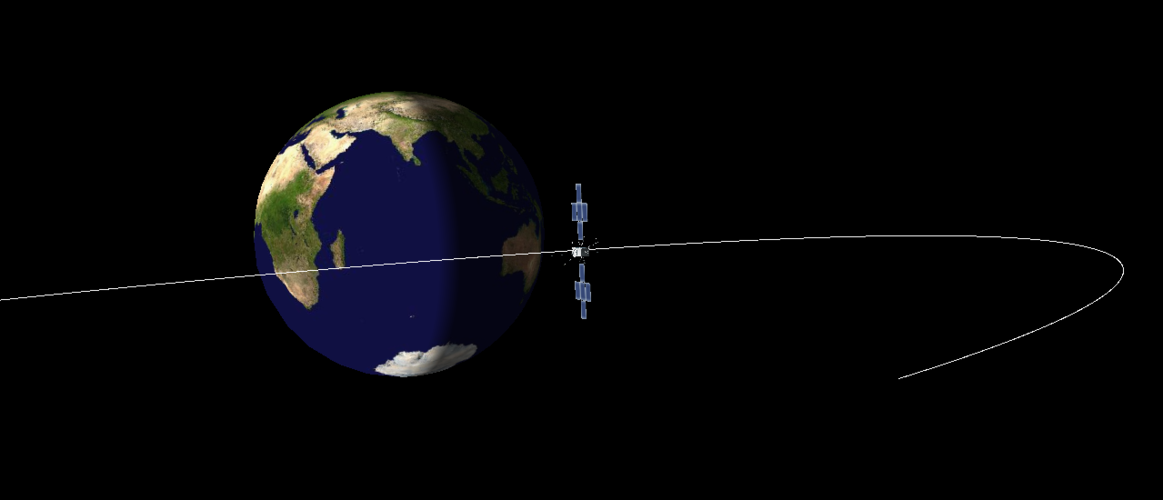
Trajectory Execution
The Jupiter Icy Moons Explorer (Juice) is scheduled to conduct its third Earth flyby as part of a complex series of gravity-assist maneuvers. According to ESA, the spacecraft will utilize the planet’s gravitational field to modify its orbital velocity and trajectory, a necessary step for its long-duration transit to the outer Solar System.
Kinetic Management
Reaching Jupiter requires immense energy that cannot be provided by chemical propulsion alone. By performing these flybys, mission controllers at ESOC effectively "sling" the probe toward its destination. This third encounter follows the historic Lunar-Earth gravity assist (LEGA) performed in August 2024, which successfully slowed the spacecraft down to redirect it toward Venus. Now, Juice returns to Earth’s vicinity to gain the outward momentum required for the next leg of its mission.
Operational Status
ESA confirms that all onboard systems remain nominal. During the approach, ground teams will utilize the opportunity to calibrate Juice’s scientific instruments—including its imaging cameras and sensors—against known terrestrial data points. These tests ensure the hardware is prepared for the high-radiation environment of the Jovian moons: Ganymede, Callisto, and Europa.
Next Phase
Once this maneuver is complete, Juice will continue its multi-year journey. The mission aims to investigate whether these icy worlds harbor habitable environments beneath their crusts. The craft is slated to enter Jupiter's orbit in 2031, eventually becoming the first spacecraft to orbit a moon other than Earth's when it settles around Ganymede in 2034.