ISS Operational Brief: Watkins Advances Low-Orbit Science
NASA Astronaut Jessica Watkins continues critical research operations aboard the International Space Station, spanning biological and physical science sectors as part of the ongoing orbital mission.
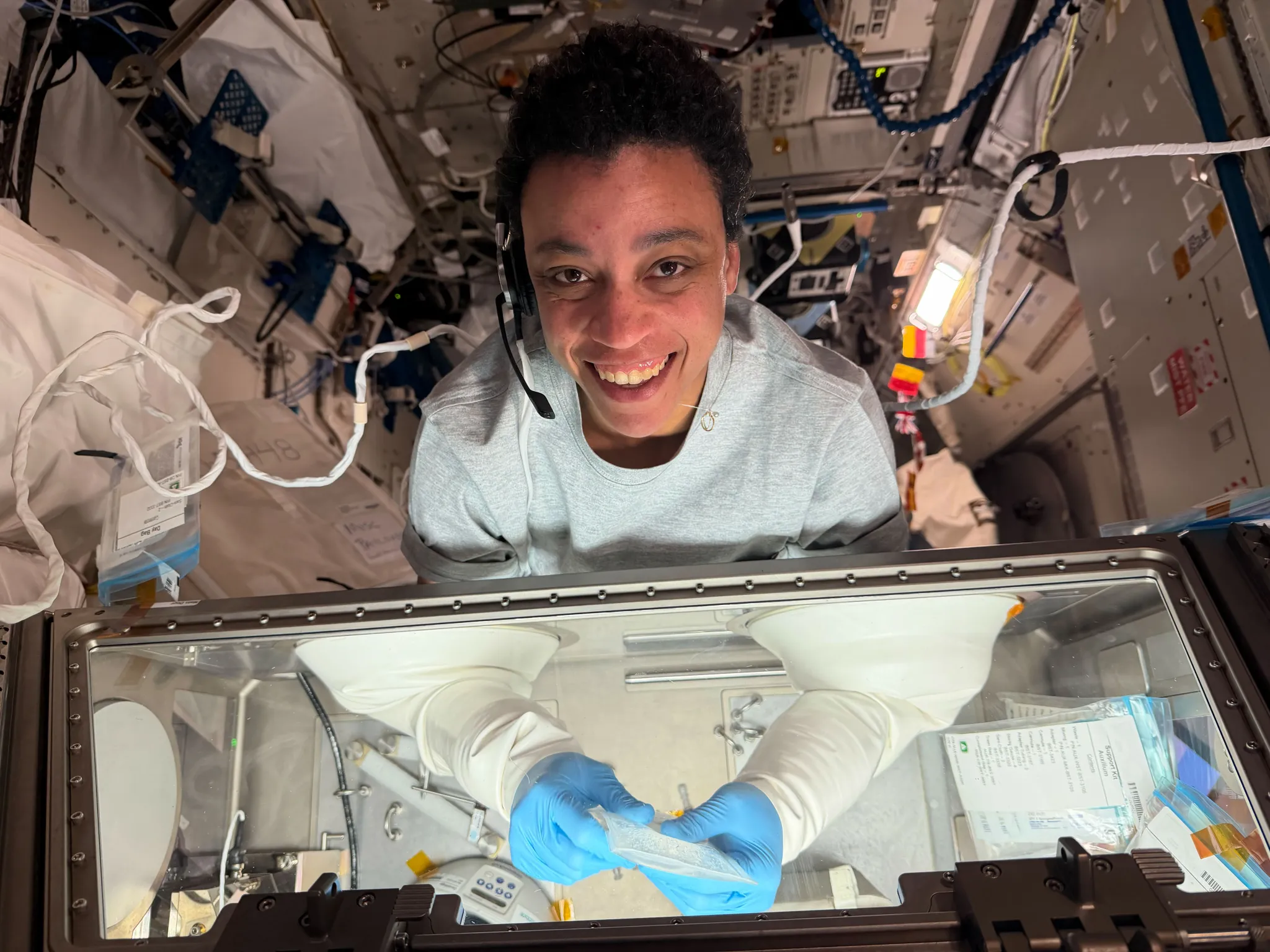
# ORBITAL REPORT: WATKINS MAINTAINS RESEARCH TEMPO
Data received from the International Space Station (ISS) confirms that NASA Astronaut Jessica Watkins has completed a series of high-priority scientific tasks. According to NASA Breaking News, Watkins’ recent activities underline the station's role as a versatile laboratory for both human health and physical science in microgravity.
MISSION PROFILE: BIOLOGICAL & PHYSICAL RESEARCH
Watkins is currently processing experiments across a spectrum of disciplines. Key areas of focus include:
- Biological Sciences: Investigating the effects of long-duration spaceflight on cellular structures and physiological systems.
- Physical Sciences: Monitoring fluid dynamics and material behavior in the station’s specialized hardware racks.
- Technical Maintenance: Ensuring the integrity of research payloads destined for future deep-space applications.
These operations are vital for the Artemis program, providing the foundational data required to sustain human life on the Moon and, eventually, Mars.
TERMINAL DATA: THE NEXT FRONTIER
Beyond Watkins’ individual contributions, NASA reports a broader technological push. Recent progress on the SR-1 Freedom spacecraft, which utilizes a nuclear fission reactor and power conversion module, signals a shift toward nuclear-powered propulsion for Mars-bound missions. Additionally, the Nancy Grace Roman Space Telescope has been recognized as a top innovation, further expanding the capabilities of our orbital infrastructure. Watkins remains a central figure in this ecosystem, bridging the gap between current orbital maintenance and future exploration milestones.