ISS Grid Upgrade: IROSA Deployment Finalized
NASA completes the deployment of Roll Out Solar Arrays (iROSA) on the International Space Station, ensuring sustainable power levels for advanced scientific research and future commercial modules.
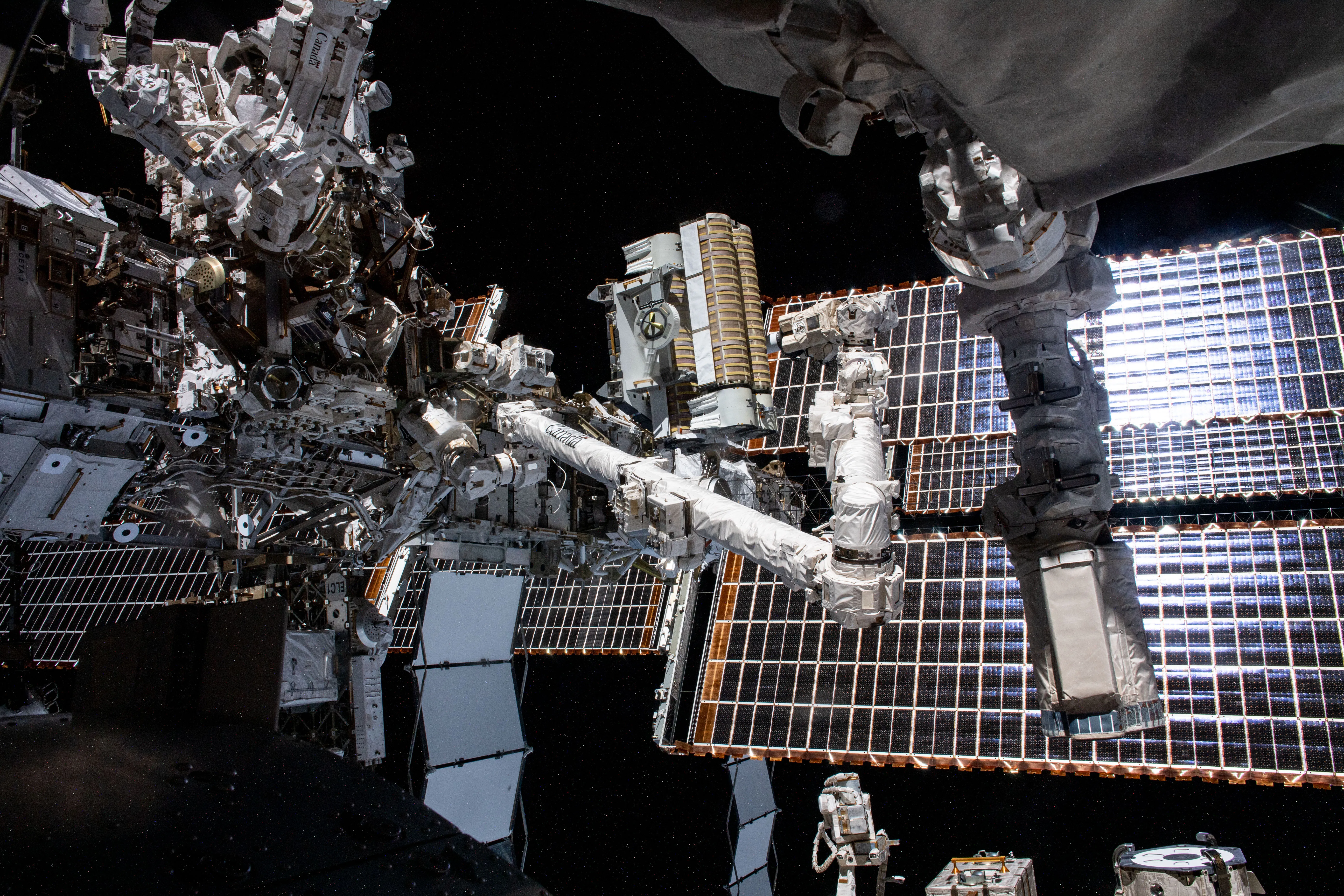
Operational Status: Power Systems Update
The orbital power infrastructure of the International Space Station (ISS) has received a critical capacity injection. According to NASA Breaking News, the installation and deployment of a full suite of Roll Out Solar Arrays (iROSA) have successfully augmented the station's energy harvest capabilities.
Tech Specs and Deployment
These upgraded arrays are designed to mitigate the natural degradation of the station’s legacy photovoltaic wings, which have been in continuous operation for over two decades. The iROSA units utilize high-efficiency solar cells and a compact, flexible design that allows them to be launched in a rolled configuration and deployed using their own kinetic tension. By positioning the new arrays partially over the original wings, the ISS program has effectively created a dual-source power generation system.
Strategic Objectives
This upgrade is not merely a maintenance task; it is a prerequisite for the station’s expanding scientific mission profile. The increased electrical load supports high-demand experiments in biotechnology, materials science, and physical physics. Furthermore, the robust power grid is essential for the integration of upcoming commercial modules and the sustained presence of international crews.
The technical success of the iROSA platform also serves as a critical proof-of-concept for future deep-space habitats, including the Gateway station intended for lunar orbit. By securing a higher megawatt-hour ceiling, the ISS remains the primary platform for testing the life support and propulsion systems required for long-duration missions to Mars.