ISPACE TAPS STARSHIP FOR LUNAR CARGO INTEGRATION
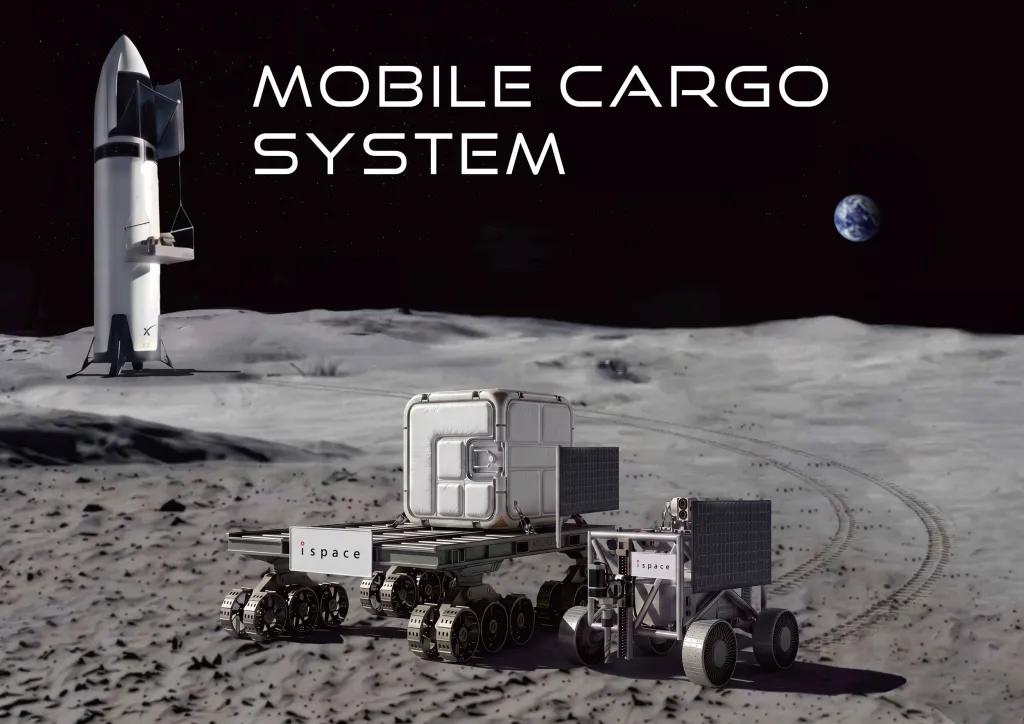
Japanese lunar exploration firm ispace has secured a 500kg payload slot on SpaceX’s Starship to deploy a new Mobile Cargo System by 2030, signaling a shift toward large-scale lunar logistics.
MISSION PARAMETERS
Tokyo-based lunar exploration firm ispace is pivoting from standalone lander development to becoming a wide-spectrum lunar access integrator. According to SpaceNews, the company has officially purchased 500 kilograms of payload capacity on a future SpaceX Starship lunar mission, currently scheduled for no earlier than 2030.
HARDWARE SPECIFICATIONS
Central to this agreement is the development of the Mobile Cargo System, a heavy-duty rover designed to bridge the gap between SpaceX’s massive Starship lander and specific lunar deployment sites. The system is engineered to transport customer payloads—ranging up to several hundred kilograms—several kilometers away from the primary landing zone. While ispace’s European subsidiary will provide the foundational rover technology, the company’s internal teams will manage ground integration and post-landing operations.
STRATEGIC OBJECTIVES
CEO Takeshi Hakamada emphasized that Starship’s high-capacity, low-cost transport is vital for a sustainable lunar economy. This partnership does not replace ispace’s internal hardware roadmap; the company continues to develop its proprietary Ultra lander, with three missions slated between 2028 and 2030. These missions involve collaborations with both Japanese and U.S. units, including a NASA Commercial Lunar Payload Services (CLPS) contract led by Draper.
OPERATIONAL OUTLOOK
Though the specific landing site remains at SpaceX’s discretion, the south polar region—targeted for NASA’s Artemis-linked base—is the high-probability candidate. The agreement leverages a long-standing relationship between the entities, as SpaceX previously launched ispace’s M1 and M2 landers via Falcon 9. The Mobile Cargo System represents a scalable logistics solution, with future iterations potentially supporting payloads exceeding one metric ton.