Ionospheric Disruption Over Iceland: Aurora Displays Intensify
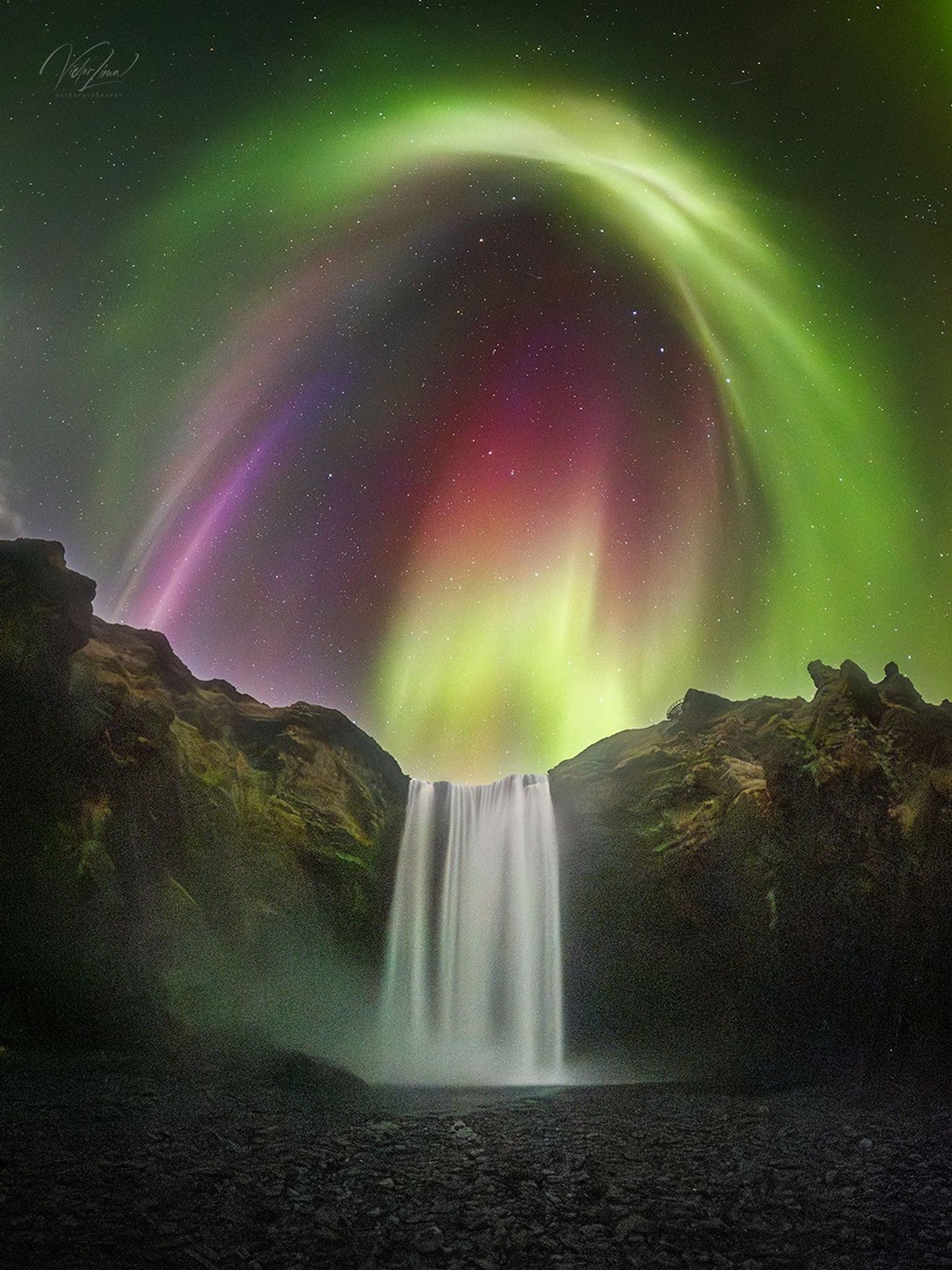
A high-altitude solar interaction has triggered intense, multi-colored auroras over Iceland’s Skógafoss, marking a period of heightened geomagnetic activity recorded in late August 2026.
DATA UPLINK: GEOMAGNETIC EVENT REPORT
Recent telemetry from high-latitude monitoring stations confirms a significant atmospheric luminescence event over the North Atlantic sector. According to NASA Breaking News, a vivid display of solar-driven light recently materialized above Iceland’s Skógafoss waterfall, highlighting the ongoing intensity of the current solar cycle.
TECHNICAL ANALYSIS
This phenomenon—captured on August 27, 2026—demonstrates the direct impact of charged solar particles colliding with the Earth's magnetosphere. As these particles descend along planetary magnetic field lines, they interact with oxygen and nitrogen at varying altitudes. The result is a multi-chromatic spectrum:
- Green Emission: Low-altitude oxygen excitation (approx. 100km).
- Red Emission: High-altitude oxygen interaction (approx. 200km+).
- Purple/Blue Tints: Nitrogen ionization in the lower thermosphere.
MISSION CONTEXT
While terrestrial observers view these events as visual spectacles, for space channel operators, they serve as critical reminders of the volatile space weather environment. This specific event coincides with broader NASA milestones, including the preparations for the Artemis II crew’s Congressional Space Medal of Honor ceremony and the upcoming launch window for the Roman Space Telescope in Florida.
Monitoring these atmospheric disturbances remains essential for orbital safety and the protection of European communication satellite arrays currently operating in polar orbits. As we move deeper into the 2026 solar window, similar ionospheric surges are anticipated.