Imaging the Void: The Sh2-188 Planetary Nebula
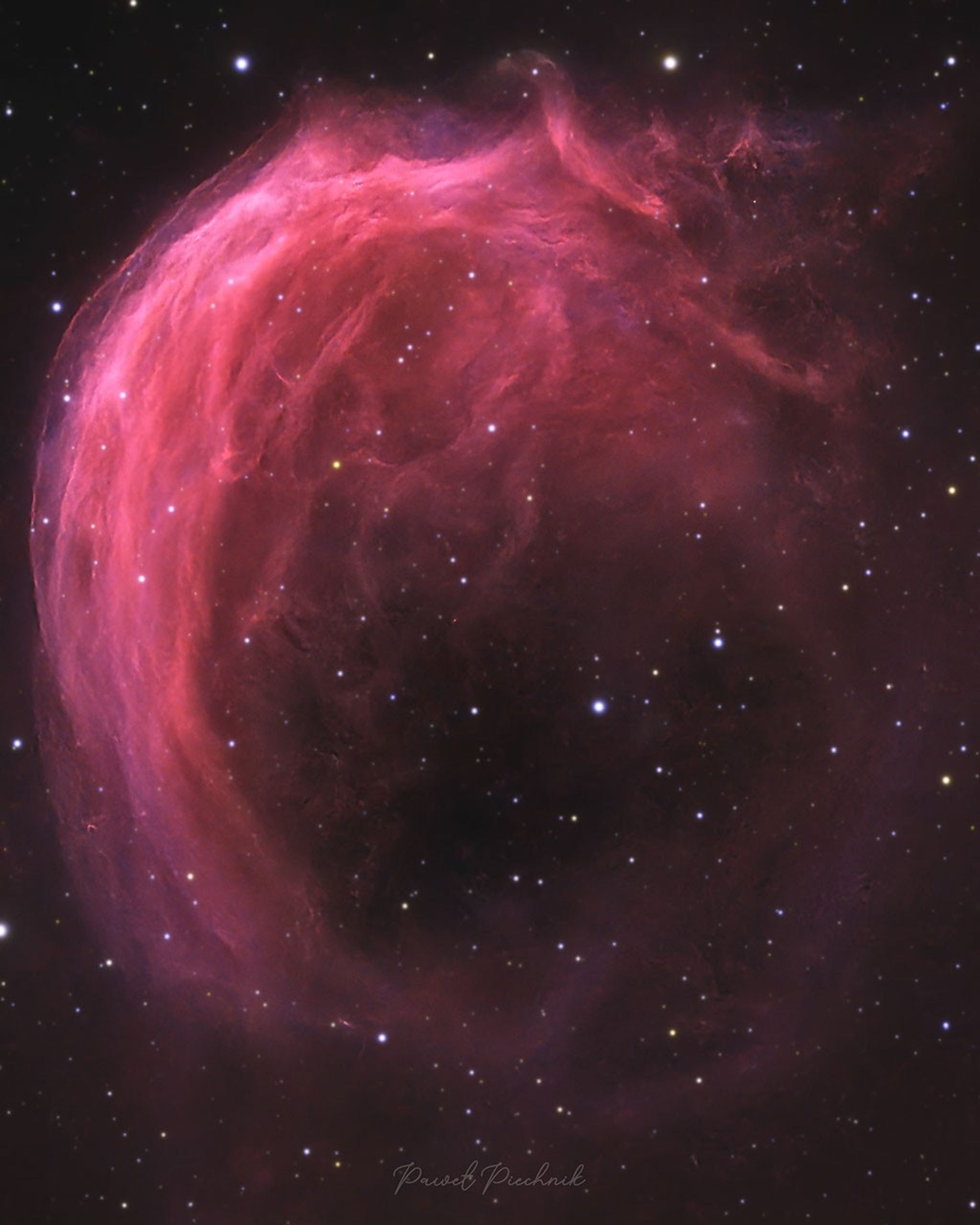
NASA’s Astronomy Picture of the Day for September 29, 2026, features Sh2-188, the 'Shrimp Nebula,' an asymmetric planetary nebula whose unique morphology reveals its rapid movement through the interstellar medium.
Data Analysis: The Sh2-188 Complex
According to NASA Breaking News, the Astronomy Picture of the Day (APOD) for 29 September 2026 highlights Sh2-188, commonly known as the Shrimp Nebula. This celestial structure is not a star-forming region, but rather a planetary nebula—the terminal phase of a sun-like star’s lifecycle located in the constellation Cassiopeia.
Kinetic Morphology
The nebula is characterized by its distinct, asymmetric crescent shape. In typical planetary nebulae, expanding gas shells form roughly symmetrical spheres or bipoles. However, Sh2-188 exhibits a bright, compressed leading edge and a faint, elongated trailing filament. Data indicates this distortion is the result of "bow shock" dynamics. As the progenitor star moves rapidly through the surrounding interstellar medium (ISM), the expelled gas collides with the ambient gas and dust, creating the compressed shock front visible in high-resolution imaging.
Observational Context
While the nebula appears relatively small from Earth's perspective, its dimensions span several light-years. The interaction between the stellar ejecta and the ISM serves as a critical laboratory for studying the density of the galactic medium and the chemical enrichment of the local neighborhood. This imaging milestone coincided with several other high-priority missions, including NASA’s SpaceX Crew-13 mission preparations and the thermal testing of the DAVINCI Venus probe, underscoring a period of intensive astrophysical monitoring and exploration hardware validation.
Spacechannel.eu will continue to monitor deep-space imaging datasets for further structural analysis of Cassiopeian nebulae.