Imaging the Void: Deep-Field Observation of the Cepheus Flare
New deep-space imaging from NASA captures the spectral structures of the Cepheus Flare, revealing high-density dust clouds and star-forming regions within the northern celestial sphere.
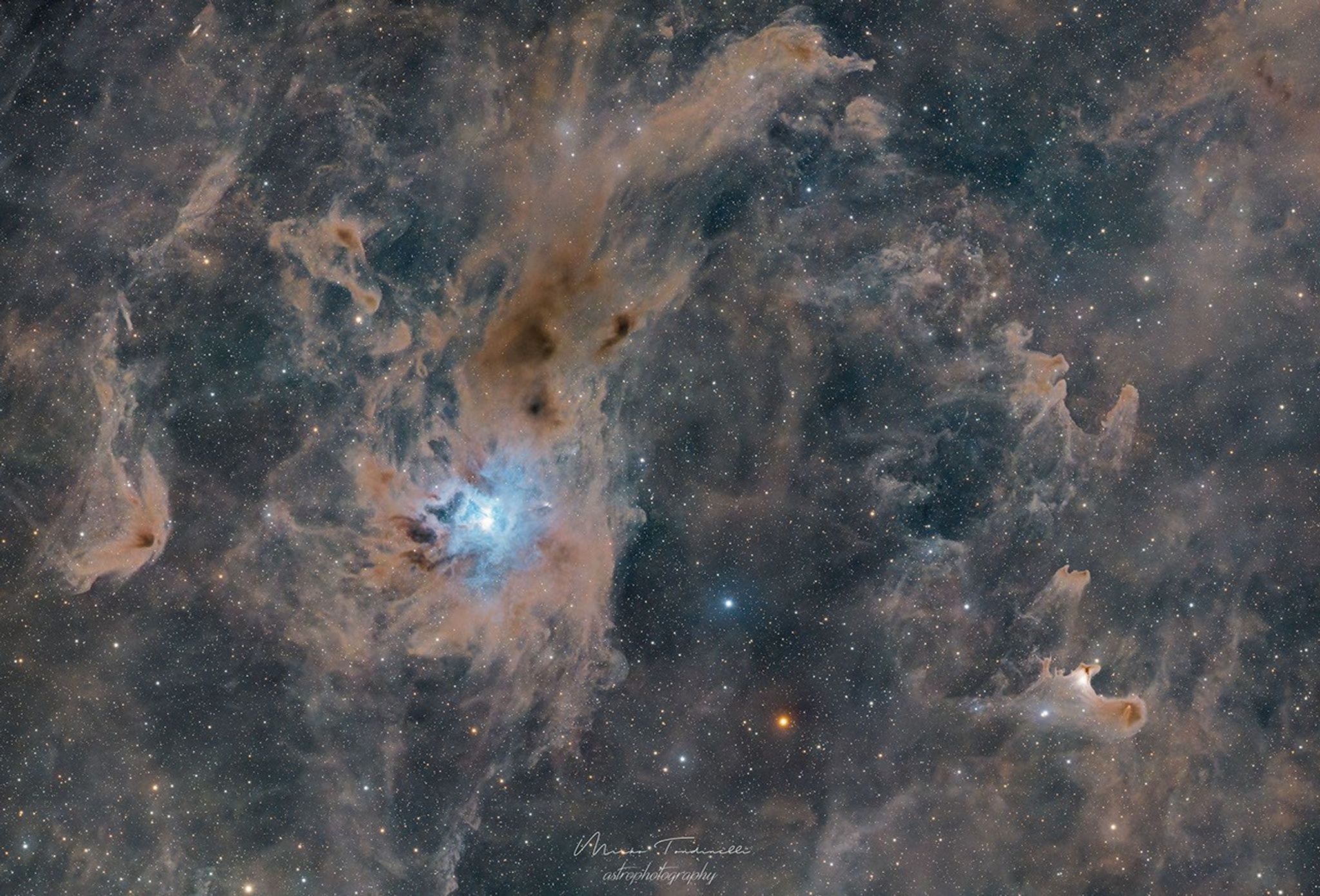
Deep Space Analysis: Cepheus Flare Observation
NASA’s Astronomy Picture of the Day (APOD) for October 30, 2026, has highlighted a significant deep-field capture of the Cepheus Flare, a vast complex of interstellar dust and gas located in the constellation Cepheus. According to NASA Breaking News, this region serves as a primary site for investigating the mechanics of star formation within our galactic neighborhood.
//Spectral Composition and Structure
The imagery reveals the intricate, haunting silhouettes of reflection nebulae and dark absorption clouds. These structures, colloquially termed "flare" due to their visual projection away from the galactic plane, are composed of high-density cosmic dust that obscures background starlight while reflecting the luminescence of embedded, hot young stars. The data highlights VDB 141 (the Ghost Nebula) and other nearby molecular clouds that define the region's unique morphology.
//Mission Context
This observation coincides with a busy operational window for NASA’s orbital assets. While the agency reports the formal conclusion of the Swift Mission, the legacy of its high-energy data continues to inform our understanding of the cosmic environment. Simultaneously, hardware milestones for the NEO Surveyor—specifically the successful testing of its sunshade—ensure that future infrared observations of the celestial north will be protected from thermal interference.
For researchers at Space Channel, these wide-field surveys are essential for mapping the distribution of matter in the Milky Way. The Cepheus Flare remains a critical laboratory for studying how gravity overcomes internal pressure to trigger the birth of new stellar systems.