Imaging the Void: Dark Nebula Lynds 1251 Emerges
NASA reveals new imaging of Lynds 1251, a dense molecular cloud and star-forming region located within the Cepheus flare.
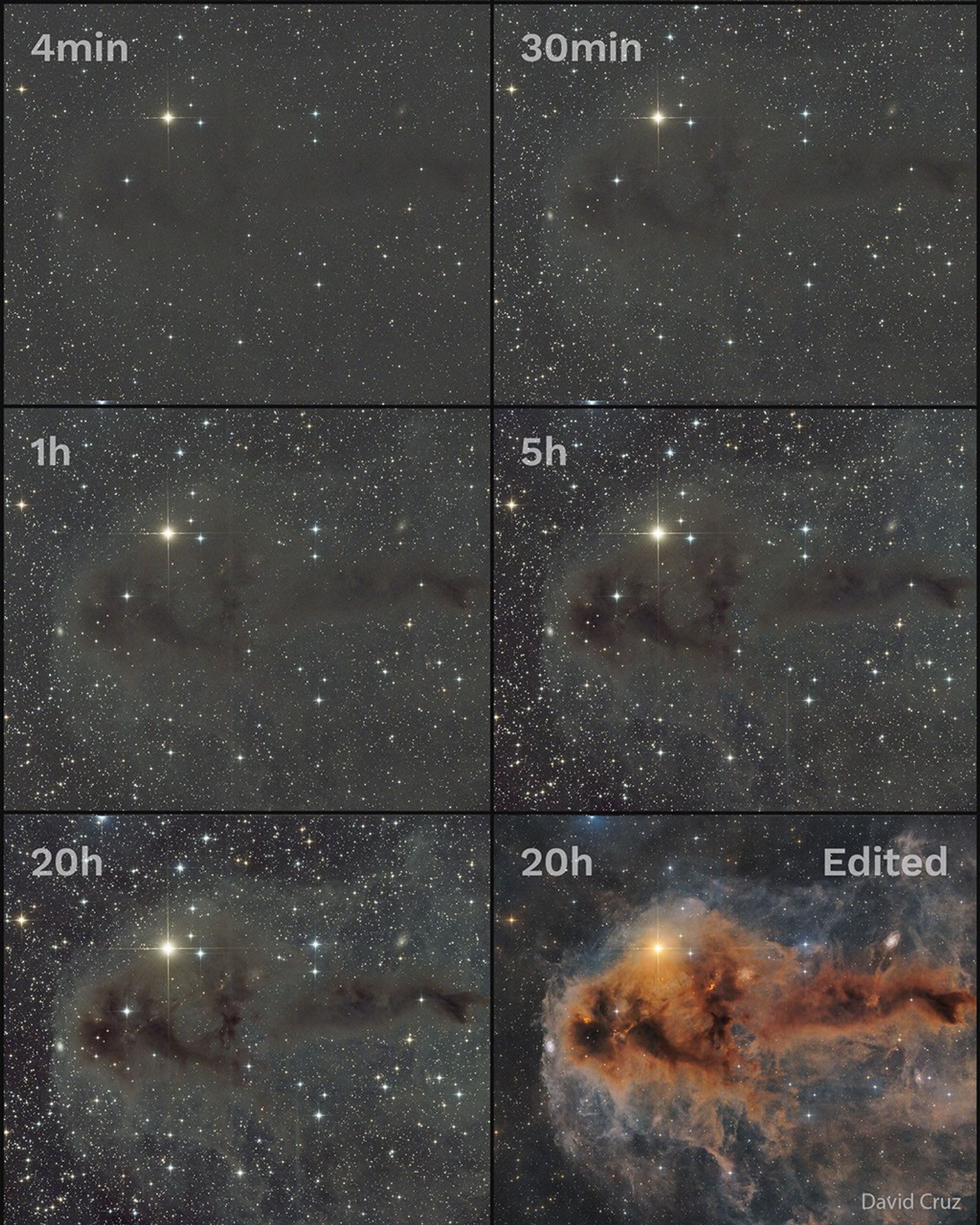
DATA FEED: LYNDS 1251
According to NASA Breaking News, the astrophysical community is shifting focus toward the emergence of Lynds 1251 (LDN 1251), a prominent dark nebula positioned within the Cepheus flare. Unlike the luminous emission nebulae often prioritized in public media, LDN 1251 is a dense molecular cloud characterized by its ability to obscure background starlight, creating a visual 'void' in the local interstellar medium.
//Stellar Formation Dynamics
Despite its opaque appearance, the nebula serves as an active stellar nursery. NASA’s latest analysis confirms that while the thick dust blocks optical wavelengths, it simultaneously collapses under its own gravity to form protostars. Infrared observations are vital for penetrating these high-density regions, revealing the thermal signatures of embryonic stars maturing within the gas pockets.
//Deep Space Proximity
The visibility of Lynds 1251 in late 2026 provides a critical window for researchers studying the lifecycle of dust and gas in the Milky Way. This region is part of a larger complex of molecular clouds that define the structure of our local galactic neighborhood. The emergence of such high-resolution imaging allows for more precise mapping of the magnetic fields and gravitational pressures that dictate how interstellar matter transitions from diffuse gas into burning stellar cores.
As we look toward the 2027 observation cycle, the data gathered from LDN 1251 will likely inform future mission parameters for infrared-heavy observatories like the James Webb Space Telescope (JWST) and upcoming European initiatives targeting the cold universe.