Imaging the Pelican Nebula: An Analysis of Gas, Dust, and Stellar Formation
New imaging data reveals the complex chemical architecture of the Pelican Nebula (IC 5070), highlighting the interplay between stellar winds and dense interstellar dust in the Cygnus constellation.
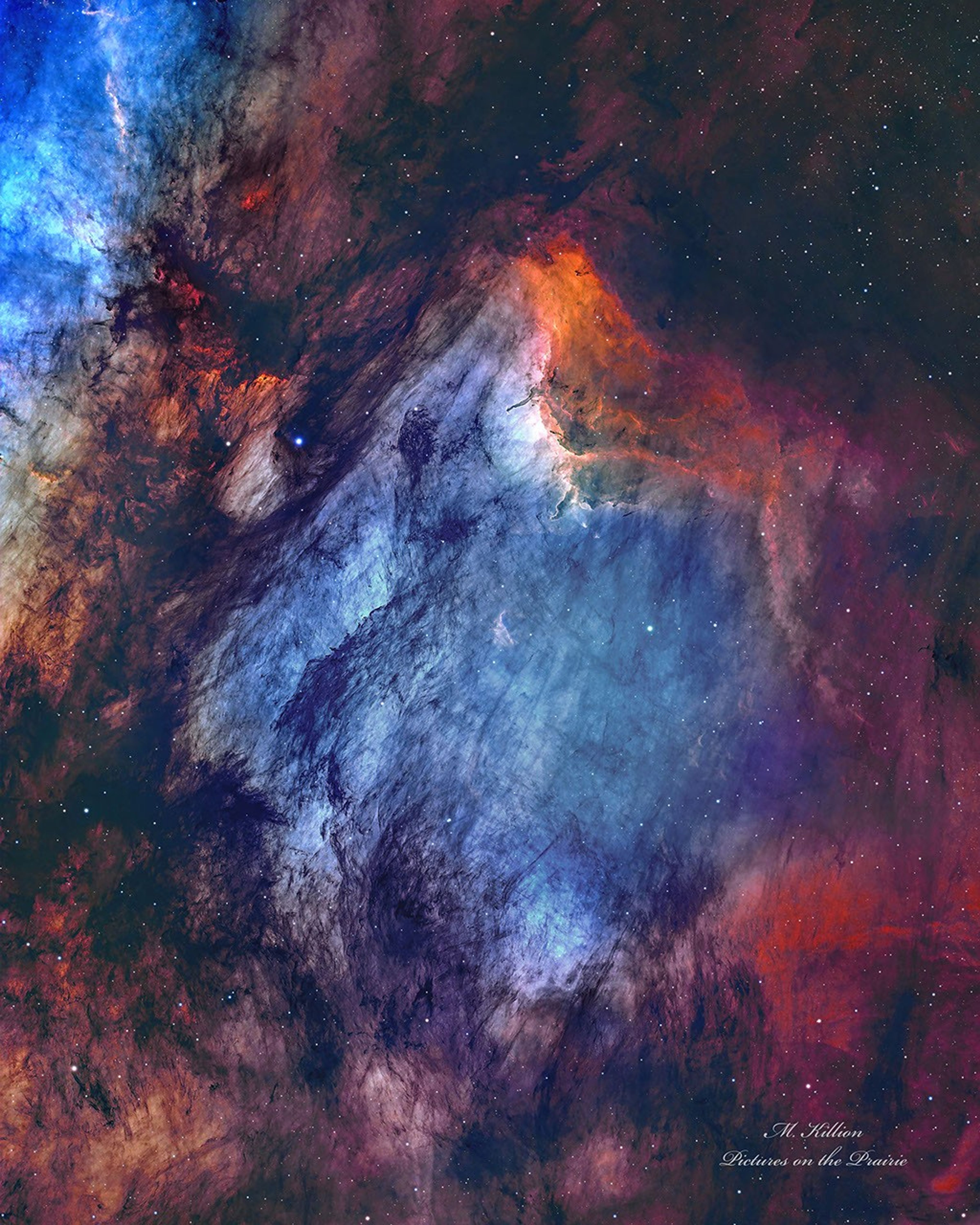
Data Analysis: IC 5070 Structure
According to NASA Breaking News, new imaging high-resolution captures of the Pelican Nebula (IC 5070) provide a detailed view of the complex dynamics within this H II region. Located approximately 1,800 light-years away in the constellation Cygnus, the nebula serves as a significant site for stellar evolution studies.
Chemical Composition and Radiative Forcing
The nebula’s distinct profile—composed of ionized gas and dark, light-blocking dust—is shaped by the intense radiation and stellar winds emanating from young, high-mass stars. These forces create the characteristic “pelican” silhouette, eroding the surrounding molecular clouds and carving out pillars of cold gas where new star formation is suspected to occur. The interaction between the ultraviolet radiation from these energetic stars and the cooler, dense material creates a high-contrast boundary layer, allowing for precise spectroscopic mapping of the region’s chemical gradients.
Observation Logistics
The Pelican Nebula is situated near the more expansive North America Nebula. Together, they form a large star-forming complex separated by a dark obscuring dust lane. Recent data releases highlight the importance of multi-wavelength imaging in penetrating these dust layers to reveal the underlying protostellar structures. The current observations emphasize the nebula's role as a laboratory for understanding the feedback loops between stellar birth and the interstellar medium (ISM) in the Milky Way.