Icarus Robotics Selects KULR Power for ISS Joyride-1 Mission
Icarus Robotics has partnered with KULR Technology Group to power its 'Joy' free-flying robot, bringing advanced battery safety and mobility to the International Space Station in 2027.
Powering Orbital Autonomy
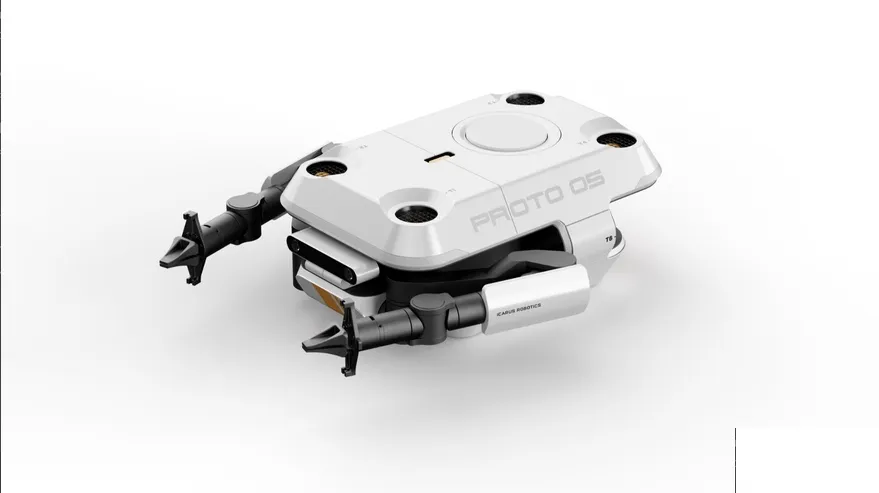
New York-based startup Icarus Robotics has confirmed the selection of KULR Technology Group to provide high-performance battery systems for its forthcoming orbital robotic platform. According to SpaceNews, the partnership centers on the KULR One Space (K1S) battery, which will serve as the primary power source for "Joy," a dexterous free-flying robot.
The Joyride-1 Mission
Scheduled for deployment to the International Space Station (ISS) in early 2027, the Joyride-1 mission aims to demonstrate how mobile robotic platforms can assist crew members with navigation, maneuvering, and maintenance tasks. Operating within pressurized environments alongside human astronauts necessitates a higher standard of safety and design compared to standard satellite hardware.
Icarus CEO Ethan Barajas noted that while traditional orbital infrastructure has focused on compute power, the supply chain for specialized electromechanical energy requirements is only now maturing. The K1S system is specifically tailored to meet NASA’s stringent crewed vehicle safety standards, leveraging flight heritage gained during the Artemis 2 lunar mission.
Infrastructure Resilience
Beyond basic task assistance, KULR and Icarus are positioning these systems to solve a critical bottleneck in space expansion: the inability to service infrastructure manually. KULR CEO Michael Mo emphasized that as humans push further into deep space and Martian environments, autonomous systems capable of inspection and repair become non-negotiable. These robots require energy solutions that move beyond the "one-size-fits-all" battery packs currently found in the commercial satellite sector, requiring customized size, shape, and performance profiles.