Icarus Robotics Advances 'Joy' Platform in Canadian Microgravity Trials
New York-based Icarus Robotics has completed critical microgravity testing for its Joy free-flying robot in Canada, securing 22 minutes of flight data ahead of a 2027 ISS deployment.
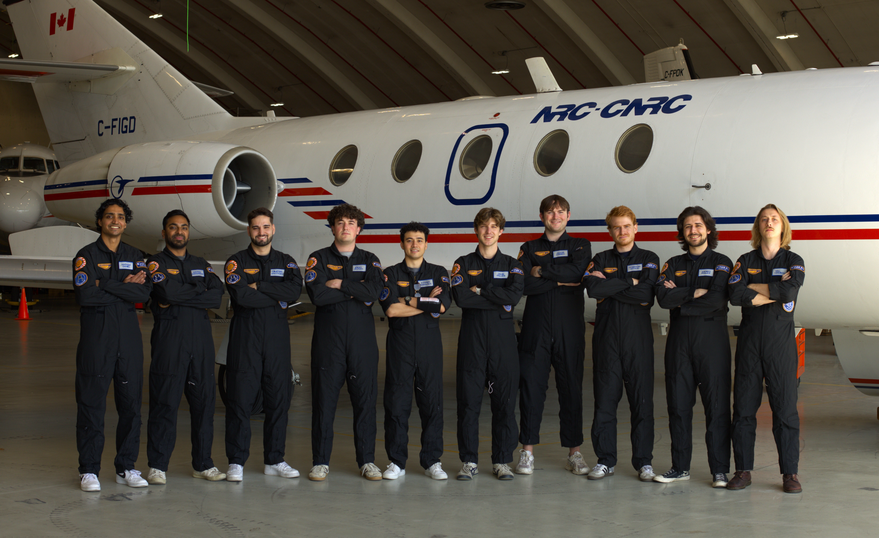
Orbital Automation Tests Move North
Icarus Robotics, a New York-based developer of dexterous orbital platforms, has concluded a series of parabolic flight tests in Canada for its free-flying robot, Joy. The mission verified the platform’s sensor suite, flight controller, and manipulation hardware across four flights, yielding 22 minutes of cumulative microgravity data.
According to SpaceNews, Icarus CEO Ethan Barajas sought Canadian facilities due to a lack of current parabolic flight availability in the United States. Zero-G, a primary U.S. operator, has temporarily paused flights, while alternative platforms from Mu-g Technologies and NASA’s modified 737-700 remain in development. This infrastructure bottleneck has forced several commercial entities, including Starlab Space, to look toward international facilities in Canada and Europe for hardware validation.
Deployment Timeline
The Canadian trials focused on crew coordination, safety protocols, and the mechanical dexterity required for Joy to operate in a pressurized microgravity environment. The testing marks a critical milestone for the startup, which aims to provide a robotic workforce capable of maintaining orbital data centers and lunar infrastructure.
Icarus is scheduled to hand over the Joy unit to NASA in January for logistics processing. The robot is slated for a technology demonstration aboard the International Space Station (ISS) in 2027. Barajas noted that while private capital is flooding into commercial space stations to succeed the ISS by 2030, domestic testing capacity has failed to match the pace of launch innovation. Joy represents a modular step toward sustaining human presence through automated maintenance and construction.