Hypersonic missile startup Castelion raises $1 billion
Company founded by former SpaceX executives aims to produce a low-cost hypersonic weapon and a broader portfolio of longer-range strike and missile defense weapons The post Hypersonic missile startup Castelion raises $1 billion appeared first on SpaceNews.

Home / Hypersonic missile startup Castelion raises $1 billion
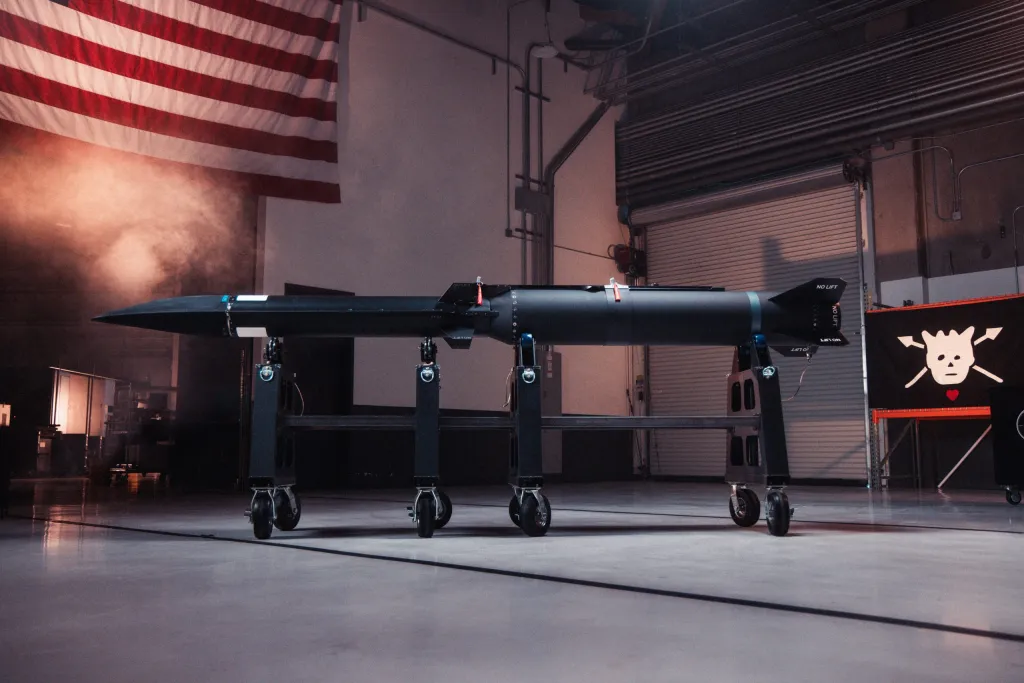
Castelion's Blackbeard hypersonic missile
WASHINGTON — Castelion, a defense-tech startup seeking to mass produce lower-cost hypersonic weapons, has raised more than $1 billion in new financing as it moves to expand missile production and develop a broader portfolio of offensive and defensive weapons.
The Series C financing announced Aug. 19 includes $800 million in equity and a $250 million committed revolving credit facility. The equity round was co-led by JPMorganChase’s Strategic Investment Group, Andreessen Horowitz and funds managed by Carlyle.
Lightspeed Venture Partners, Lavrock Ventures, Altimeter, General Catalyst and Interlagos also participated, along with new investor T. Rowe Price Associates. Castelion said the financing values the four-year-old startup at $13 billion.
The funding will be used to expand production of Blackbeard, Castelion’s hypersonic strike missile, at its manufacturing complex in Sandoval County, New Mexico, while accelerating work on a longer-range precision strike weapon and defensive systems for air and missile defense.
Castelion and its investors are betting on the Pentagon’s drive to produce missiles and other munitions faster and in much larger quantities after recent conflicts exposed strains in U.S. weapons stockpiles and manufacturing capacity. The Defense Department has sought to bring new suppliers into a market long dominated by traditional defense contractors.
“There’s a manufacturing renaissance underway and this round turbocharges American production of Blackbeard,” Bryon Hargis, Castelion’s co-founder and chief executive, said in a statement.
Castelion was founded in 2022 by Hargis, Sean Pitt and Andrew Kreitz, three former SpaceX executives whose backgrounds span national security satellites, launch sales and finance. The company has sought to apply elements of SpaceX’s development model — including vertical integration, frequent hardware testing and designing products for high-rate manufacturing — to missile production.
Castelion raised $350 million in a Series B financing in December 2025.
The company said it has secured more than $500 million in U.S. military contracts over the past 18 months. The initial fielding of Blackbeard is targeted for 2027.
The U.S. Navy has emerged as its main customer. It awarded Castelion about $50 million in February to advance Blackbeard toward an early operational capability, followed in April by a roughly $105 million award to integrate, test and certify the weapon on the F/A-18E/F Super Hornet.
In June, the Navy placed a $23.4 million firm-fixed-price order for 50 pre-production Blackbeard weapons and 50 shipping and storage containers.
Blackbeard still faces integration, flight testing and certification before reaching the operational fielding Castelion is targeting for next year. The company also has yet to demonstrate that it can sustain the production rates and costs it is promising as manufacturing moves beyond prototypes.
The Pentagon in May signed a framework agreement with Castelion contemplating a two-year Blackbeard production contract with a minimum production rate of 500 missiles annually following successful testing and validation.
Blackbeard is expected to cost roughly $384,000 per missile, Reuters reported in April, compared with millions or tens of millions of dollars for some existing U.S. hypersonic weapons. Achieving that price at scale could significantly change the economics of long-range hypersonic strike and allow the Pentagon to procure the weapons in much larger quantities.
_Related_

Sandra Erwin
Sandra Erwin writes about military space programs, policy, technology and the industry that supports this sector. She has covered the military, the Pentagon, Congress and the defense industry for nearly two decades as editor of NDIA’s National Defense... More by Sandra Erwin
Sign in or register
Close
Continue with Google
Or
Enter the code sent to your email
Email address
Enter your password
Sign in by entering the code we sent to , or clicking the magic link in the email.
ContinueResend codeEmail me a one-time code instead Forgot password Go back
Continue Set a password (optional)
We'll send a verification code to %EMAIL%.
Send code
Skip for now
To continue reading this article:
Register now to get
2 more free articles this month.
You’ll also receive our weekly Editor’s Choice, SpaceNews This Week and Opinions newsletters. Opt-out at any time.
Sign up
Sign in to an existing account
Get unlimited access to SpaceNews.com, the SpaceNews app and our digital monthly magazine for less than $5 per week.
$250/year
Subscribe now
_Cancel anytime. Sales tax may apply. No refunds._ _Terms and conditions apply._
Link
Copy link
Digital All-Access Subscription (Monthly) $25.00 / monthDigital All-Access Subscription (Quarterly) $70.00 every 3 monthsDigital All-Access Subscription (Yearly) $250 / yearDigital All-Access Subscription (2 Years) $450 every 2 yearsPurchase
Sign in to an existing account Cancel