Hubble Reaches 200,000 Orbits While Hunting Lensed Supernova
The veteran Hubble Space Telescope has crossed a historic milestone of 200,000 orbits around Earth. Simultaneously, it continues its high-stakes mission to capture a rare gravitationally lensed supernova, proving the observatory's enduring utility in deep-space observation.
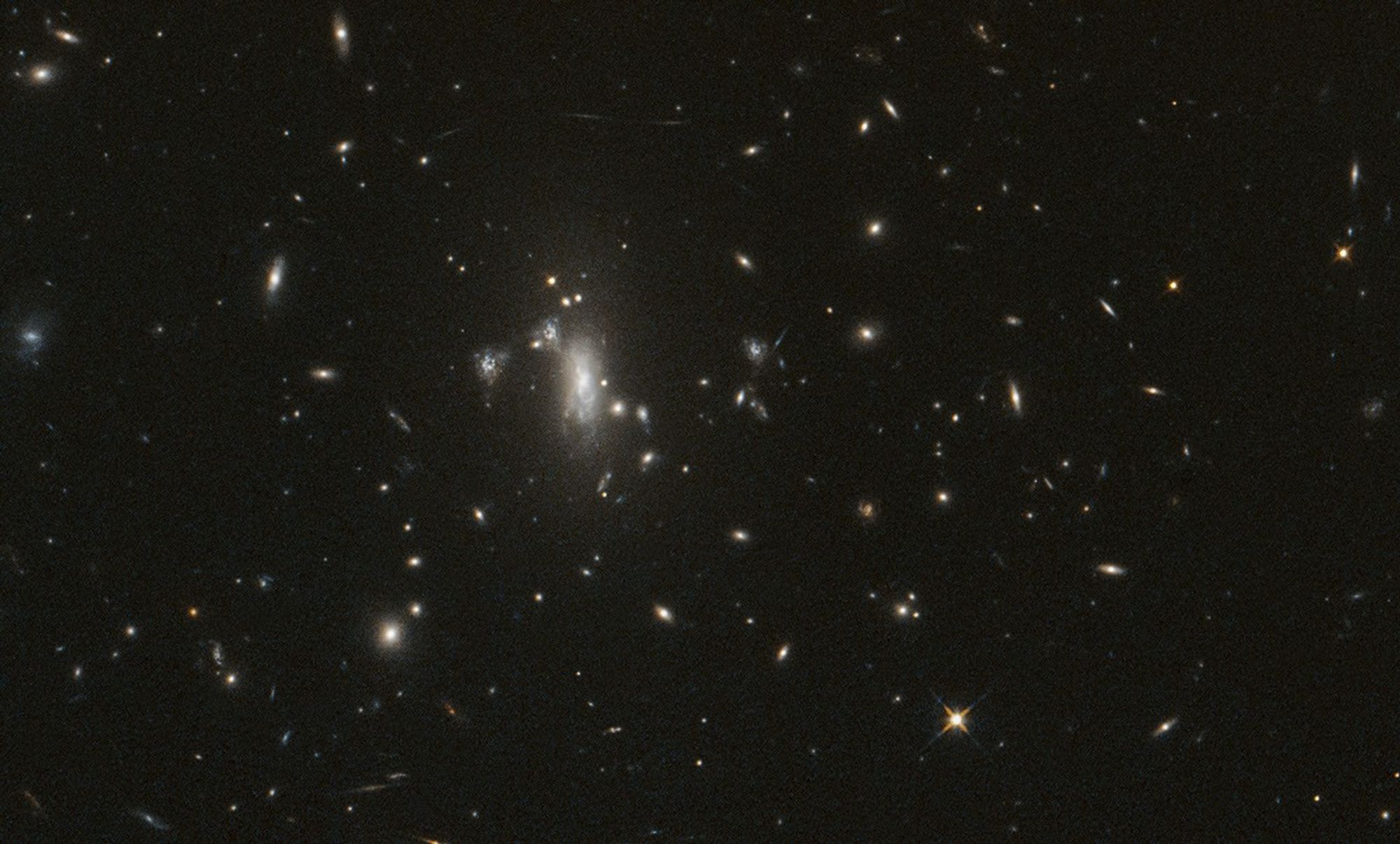
Operational Log: Milestone 200,000
The Hubble Space Telescope has officially logged its 200,000th orbit since deployment in 1990. According to NASA Breaking News, this veteran hardware remains a critical asset in the orbital fleet, maintaining a rigorous schedule of scientific observations while exceeding its original lifespan expectations.
Tactical Deep-Space Observation
Hubble’s current primary objective involves the pursuit of a gravitationally lensed supernova. Gravitational lensing occurs when a massive foreground object, such as a galaxy cluster, warps the fabric of spacetime. This effect acts as a natural cosmic magnifying glass, amplifying and often duplicating the light of distant stellar events located directly behind it.
Researchers are utilizing this phenomenon to observe a specific supernova whose light has been redirected and split into multiple paths. By tracking these time-delayed images, astronomers can measure the rate of cosmic expansion with unprecedented precision. The data provides a critical cross-reference for current cosmological models concerning dark energy and the Hubble Constant.
Hardware Resilience
Despite the emergence of newer platforms like the James Webb Space Telescope (JWST), Hubble’s ultraviolet and visible light capabilities remain unmatched. Its 200,000-orbit record is a testament to the robust engineering and successive servicing missions that have kept the observatory operational. The telescope continues to function as a primary tool for mapping the large-scale structure of the universe, proving that even legacy systems can deliver cutting-edge data in the search for high-redshift phenomena.