Hubble Identifies Potential Second-Generation Planet Orbiting White Dwarf
New analysis of decades-old Hubble data suggests the existence of a planet formed from the debris of its dying star, challenging traditional models of planetary evolution.
Terminal Entry: 09-24-XT
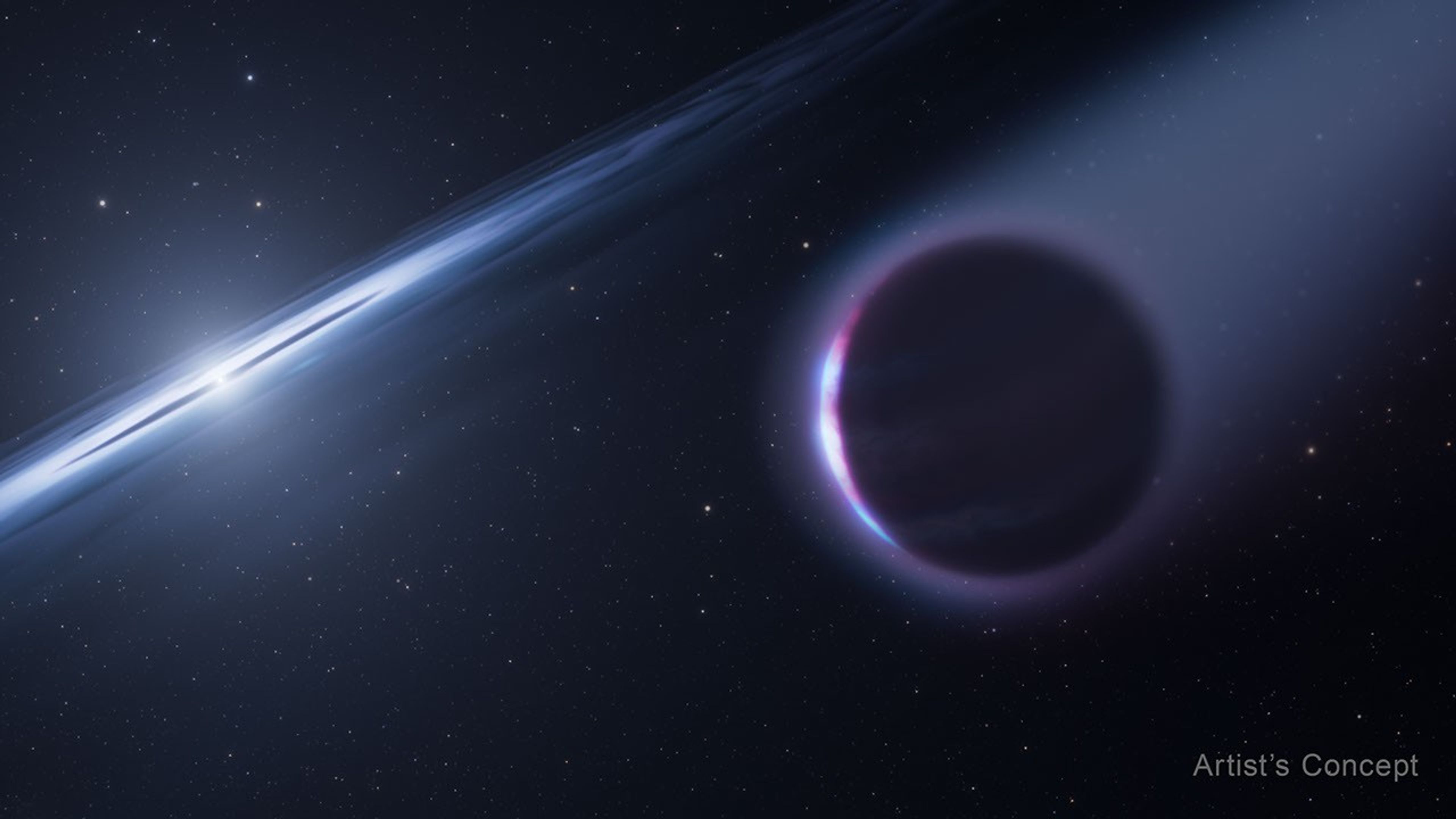
Data synthesis from the Hubble Space Telescope has resolved a long-standing anomaly involving the white dwarf G238-44. According to NASA Breaking News, astronomers have identified a candidate planet that appears to have formed not from the original stellar nebula, but from the salvaged wreckage of the star’s own death throes.
This "second-generation" world exists in a system where the primary star has already transitioned through its red giant phase and collapsed into a white dwarf. During this violent evolution, any original inner planets would have been incinerated or absorbed. However, the presence of a planetary mass in this system suggests a rare secondary accretion process.
Analytical Breakdown
The suspected planet likely coalesced from the massive disk of dust and gas shed by the star during its terminal expansion. This suggests that planetary formation is a more resilient process than previously modeled, occurring even in the wake of stellar collapse.
Observations indicate that the atmosphere of the white dwarf is being polluted by metallic elements—silicon, magnesium, and iron—likely drawn from the gravitational disruption of smaller planetesimals or the secondary planet itself. This chemical signature provides the diagnostic evidence for the "cold case" that had puzzled researchers for years. The findings imply that even after a star dies, the cycle of planetary birth can restart, utilizing the enriched heavy elements left behind by the progenitor.
Conclusion
The discovery forces a recalibration of exoplanetary lifespans. Systems previously thought to be sterile post-nova may remain active sites for structural formation, expanding the parameters for where future deep-space probes might search for stable orbital bodies.