Hubble Identifies Intermediate-Mass Black Hole in Omega Centauri
Astronomers have uncovered a 'missing link' in cosmic evolution: an intermediate-mass black hole located at the heart of the globular cluster Omega Centauri.
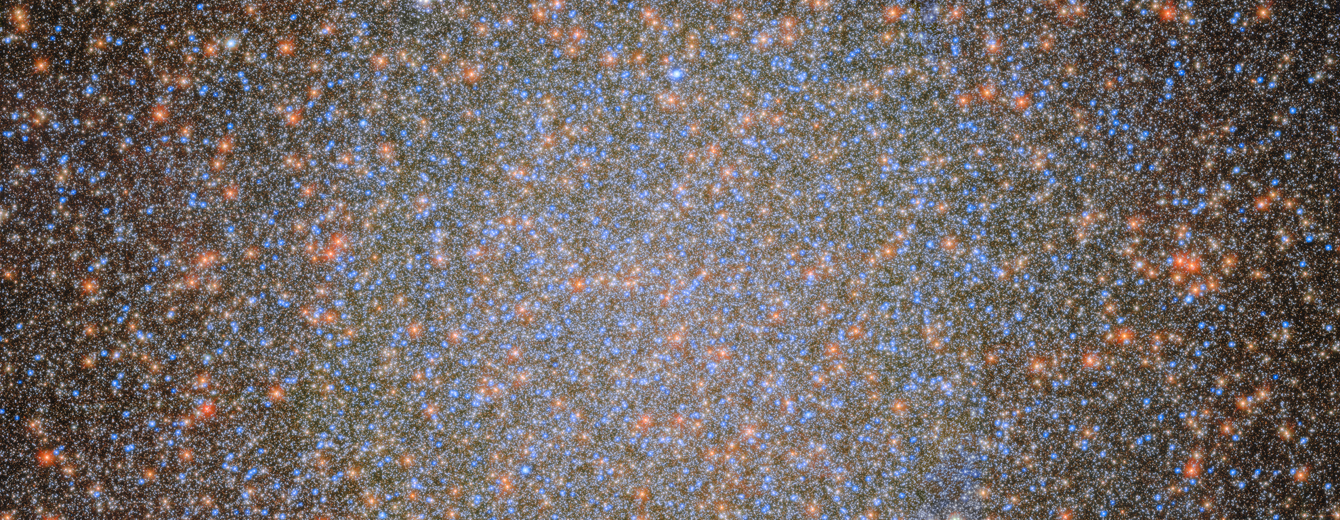
# Detection Confirmed: Omega Centauri’s Central Engine
Data from the Hubble Space Telescope has provided the most definitive evidence to date for a rare class of cosmic object: the intermediate-mass black hole (IMBH). According to NASA Breaking News, researchers have identified a gravitational anchor located within Omega Centauri, a massive globular cluster approximately 17,000 light-years from Earth.
The Missing Link Found
For decades, astrophysicists have sought the "missing link" between stellar-mass black holes (resulting from single collapsed stars) and the supermassive giants found at galactic cores. This newly detected candidate in Omega Centauri occupies that void, estimated at roughly 8,200 times the mass of our Sun.
Kinetic Analysis
The discovery was made not through direct imaging, but by measuring the high-velocity movement of stars near the cluster's center. Using over 20 years of Hubble archival data, the team tracked 1.4 million stars. Seven high-speed stars in the innermost region provided the necessary proof; their rapid orbits require a massive, invisible object to keep them from escaping the cluster entirely.
Reclassifying Omega Centauri
This finding suggests Omega Centauri is not a standard globular cluster, but likely the stripped core of an ancient dwarf galaxy consumed by the Milky Way. Its central black hole was "frozen" in time, providing a window into how early galactic seeds formed.
As orbital survey capabilities expand, this detection validates the use of long-term astrometric data to locate invisible mass in the deep field.