HUBBLE DATA OPTIMIZES ROMAN SPACE TELESCOPE TARGETING
NASA’s Hubble Space Telescope is leveraging gravitational lensing to scout deep-space targets for the upcoming Nancy Grace Roman Space Telescope, maximizing future dark energy and exoplanet research.
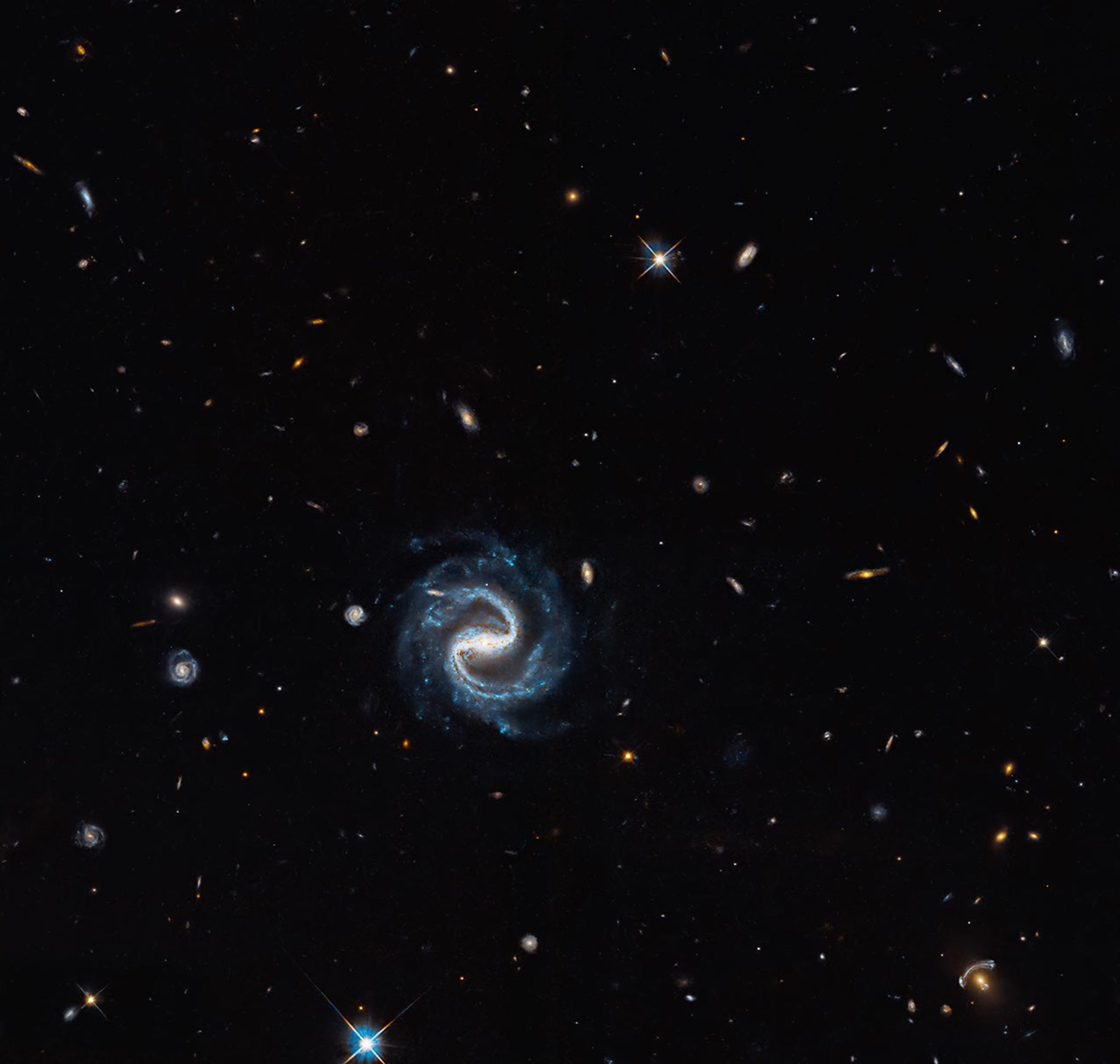
DATA TRANSMISSION: DEEP SPACE SCOUTING
According to NASA Breaking News, the Hubble Space Telescope has initiated a critical reconnaissance phase for its successor, the Nancy Grace Roman Space Telescope. By utilizing gravitational lensing—a phenomenon where massive foreground objects warp spacetime to magnify distant background light—Hubble is cataloging high-priority targets that the Roman mission will later analyze in unprecedented detail.
SYSTEM SYNERGY: HUBBLE AND ROMAN
While Roman is engineered for wide-field surveys, possessing a field of view 100 times larger than Hubble, it requires a roadmap to identify rare cosmic alignments. The current Hubble initiative serves as this roadmap. By identifying clusters that act as natural cosmic magnifying glasses, Hubble ensures that Roman can deploy its High Latitude Wide Area Survey with maximum efficiency.
SCIENTIFIC OBJECTIVES
The mission profile focuses on two primary pillars of modern astrophysics: dark energy and dark matter. The gravitational lenses identified by Hubble allow for the precise measurement of how light bends around dark matter reservoirs, providing clues to the universe’s expansion rate. Additionally, these lenses offer a high-resolution window into the early universe, revealing galaxies that would otherwise remain below the detection threshold.
This strategic pairing optimizes mission uptime for the 2027-launch window, ensuring Roman’s instrument suite is calibrated for the most scientifically significant sectors of the celestial sphere. Data acquisition remains ongoing.