Hubble Analysis: Superbubble N44 Reveals Galactic Cavity Dynamics
A high-resolution imaging survey from the Hubble Space Telescope has identified a massive 'superbubble' within the Large Magellanic Cloud nebula N44, challenging existing models of interstellar medium erosion.
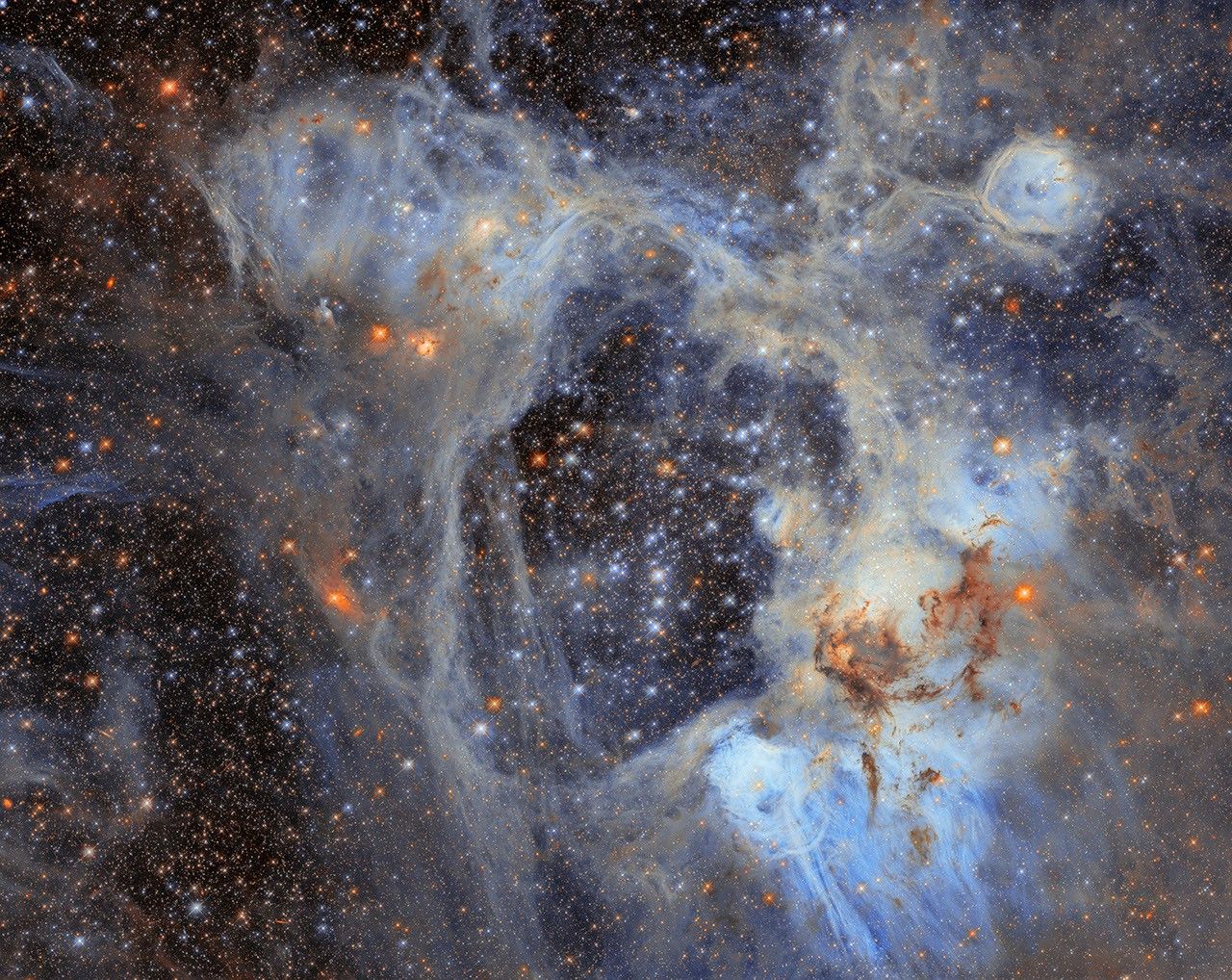
Orbital Data Log: N44 Superbubble
Data processed by the Hubble Space Telescope has provided a high-fidelity look at a complex astronomical structure known as a "superbubble" within the nebula N44. Located in the Large Magellanic Cloud, a satellite galaxy of the Milky Way, this nebula is a dense field of gas, dust, and ionized hydrogen.
According to NASA Breaking News, the central feature of this sector is a vast, hollowed-out cavity spanning approximately 250 light-years. This void, designated a superbubble, is the result of massive internal forces clearing the surrounding interstellar medium. While the exact mechanics of its formation remain under scientific scrutiny, researchers suggest a two-stage process. First, high-velocity stellar winds emitted by massive, hot stars within the central cluster push gas outward. Second, the subsequent supernova explosions of these aging stars provide the final kinetic energy required to carve the cavernous structure.
However, a discrepancy exists in the data. X-ray emissions detected within the bubble suggest a mismatch between the current age of the stellar cluster and the expected timing of such supernova events. This indicates a more complex evolutionary history than a single sequence of stellar death. Surrounding the void, the glowing gas of N44 marks intense zones of star formation, where compressed material triggers the birth of new stellar bodies.
Technical Specifications
- Target: N44 Nebula (Large Magellanic Cloud)
- Structure: Superbubble / Interstellar Cavity
- Diameter: ~250 Light-Years
- Sensor Source: Hubble Space Telescope (ESA/NASA)
End transmission.