Hubble Analysis: Spiral Galaxy NGC 5668 Captured at Oblique Inclination
NASA’s Hubble Space Telescope has delivered high-resolution imagery of NGC 5668, a spiral galaxy located in the Virgo constellation. The data highlights intense star formation and supernova activity within this stellar nursery.
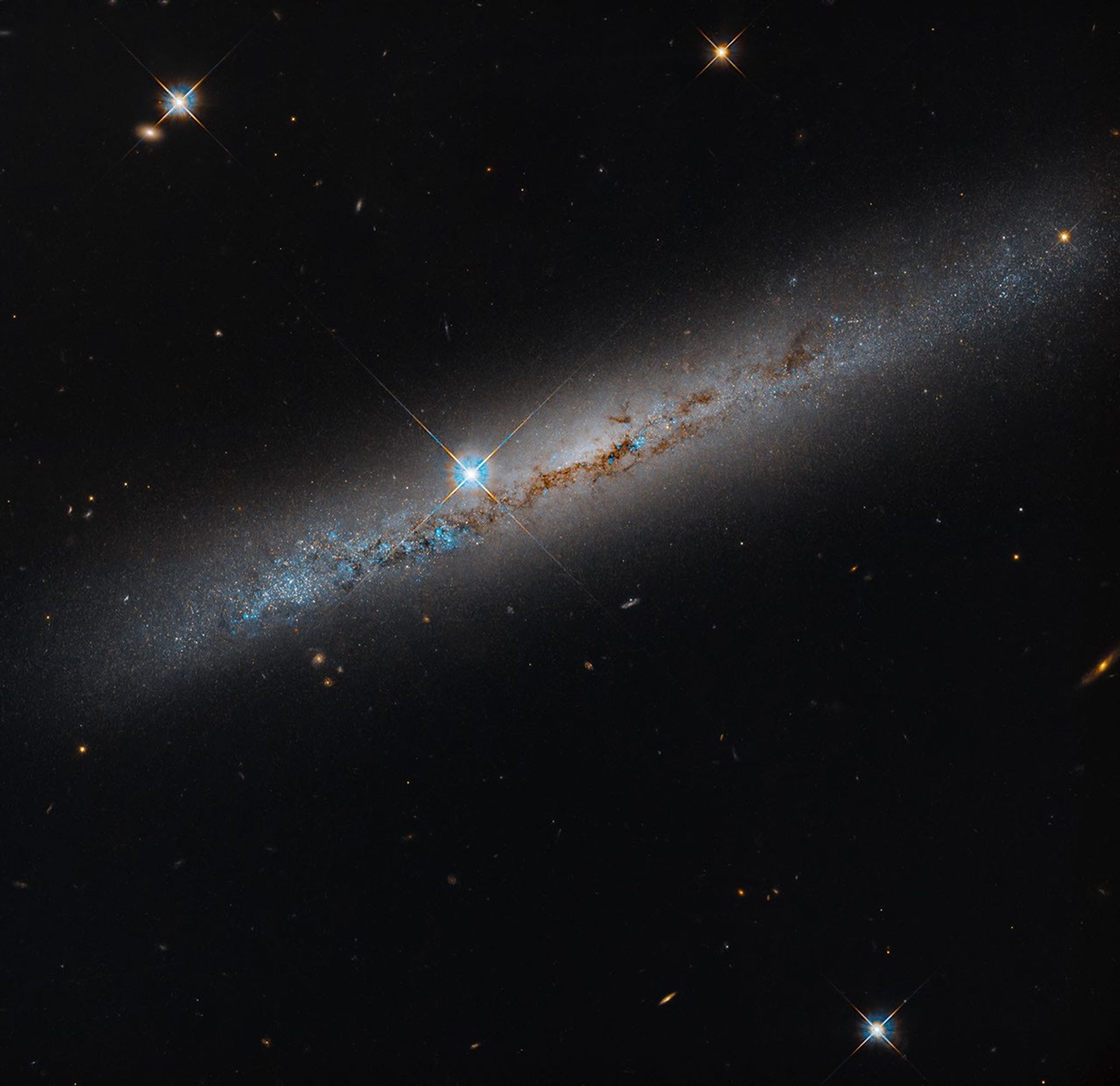
Data Acquisition: NGC 5668
The Hubble Space Telescope has successfully imaged the spiral galaxy NGC 5668, situated approximately 90 million light-years from Earth in the Virgo constellation. According to NASA Breaking News, the celestial object is positioned at an oblique angle, providing a distinct perspective that bridges the gap between a direct face-on view and a side-on profile.
Stellar Dynamics and Supernovae
NGC 5668 is classified as a site of vigorous star-forming activity. The galaxy’s structure is notable for its lack of a prominent central bar, yet it possesses a high rate of stellar birth. This intensity is evidenced by the observation of three distinct supernovae within the system over the past three decades: SN 1952G, SN 1954B, and SN 2003kj. These high-energy events provide critical data points for researchers tracking the lifecycle of massive stars.
Galactic Outflows
Advanced spectroscopic analysis reveals the presence of high-velocity clouds of neutral hydrogen gas moving vertically away from the galactic plane. Scientists hypothesize these "chimneys" are formed by the cumulative energy of stellar winds and multiple supernova explosions. This process ejects cold gas into the galactic halo, which eventually cools and falls back into the disk, fueling subsequent generations of star formation. The Hubble data continues to refine our understanding of how galaxies recycle matter to sustain long-term luminosity.