Hubble Analysis: Crimson Ionization in the Orion Nebula
New observations from the Hubble Space Telescope reveal high-resolution details of a crimson emission nebula within the Orion constellation, showcasing the effects of extreme ultraviolet radiation.
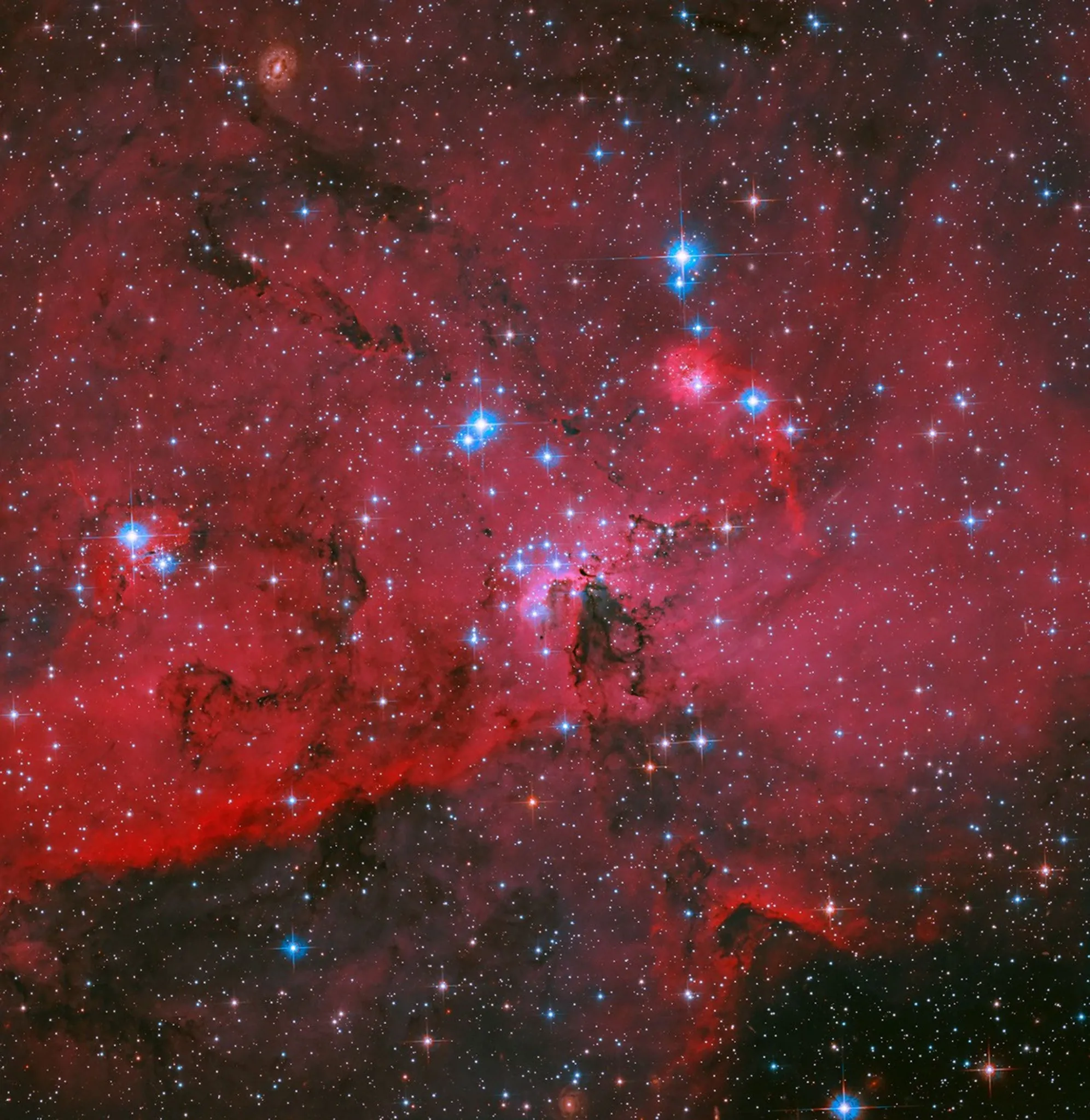
Spectroscopic Data: Orion Sector
Data transmitted by the Hubble Space Telescope has provided a sharp visual reconnaissance of a vibrant crimson cloud located within the Orion constellation. According to NASA Breaking News, the image captures a high-density region of ionized gases and stellar clusters, highlighting the ongoing structural evolution of the local interstellar medium.
Stellar Dynamics and Ionization
The deep red hue characterizing the nebula is the result of specific chemical and physical interactions. Nitrogen and hydrogen gases within the cloud are subjected to intense levels of ultraviolet radiation originating from nearby high-mass stars. This energy bombardment strips electrons from the atoms, a process known as ionization. As these atoms eventually recombine or transition to lower energy states, they emit light at wavelengths that dominate the red end of the visible spectrum.
Observational Context
Hubble’s Wide Field Camera 3 (WFC3) performed the capture, utilizing various filters to isolate these specific gaseous emissions. The resulting data set allows researchers to map the distribution of matter and the influence of stellar winds on the surrounding nebular architecture. While the Orion nebula is one of the most documented regions in the night sky, these specific frames focus on the intricate filaments of dust and gas that act as the raw materials for future planetary systems.
This observation serves as a calibrated baseline for continuing studies into star formation rates and the kinetic energy dispersion within emission nebulae. The mission continues to demonstrate the efficacy of aging orbital assets in delivering heavy-duty astrophysical data.