HERA MISSION: DEEP SPACE SOFTWARE OPTIMIZATION IN PROGRESS
ESA engineers have successfully deployed a critical software update to the Hera spacecraft during its transit to the Dimorphos asteroid, ensuring its autonomous navigation systems are ready for high-fidelity mapping.
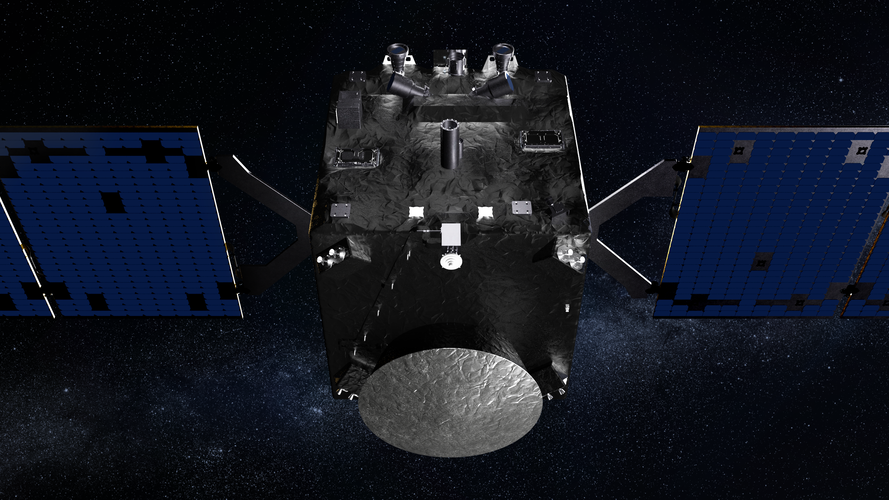
SYSTEM STATUS: OPTIMIZING
En route to the Didymos binary asteroid system, the Hera spacecraft has received a major software overhaul. This late-stage update—executed while the probe is millions of kilometers from Earth—is designed to refine its autonomous navigation and instrument integration ahead of its 2026 arrival. According to ESA, the process ensures that the spacecraft can operate with the precision required to map the impact site left by NASA’s DART mission.
AUTONOMOUS TARGETING
The upgrade focuses primarily on the "asteroid deck" instruments, which include sensors for thermal imaging, laser ranging, and hyperspectral analysis. By updating the flight software in transit, mission controllers at ESOC in Germany are providing Hera with the latest algorithms for visual tracking. This autonomy is critical; the round-trip signal delay at Didymos precludes real-time human piloting. Hera must identify the crater on Dimorphos and maintain a stable orbit using its own onboard logic.
INSTRUMENT RECALIBRATION
Beyond navigation, the update synchronizes the spacecraft’s secondary payloads, including its two Juventas and Milani CubeSats. These smaller units will eventually be deployed to conduct radar sounding and dust analysis. The software patch optimizes how Hera processes data from its AFC (Asteroid Framing Camera), effectively sharpening its digital eyes for the complex maneuvers required to fly within kilometers of the asteroid surface. This maneuver demonstrates ESA’s capability to maintain and upgrade deep-space assets dynamically, mitigating risks identified during the initial cruise phase.