Helix Nebula Dynamics: Cometary Knots Reveal Stellar Death Archetype
A deep-field analysis of the Helix Nebula (NGC 7293) identifies 'cometary knots'—massive gaseous fragments trailing from a dying star—offering a blueprint for our own solar system's end.
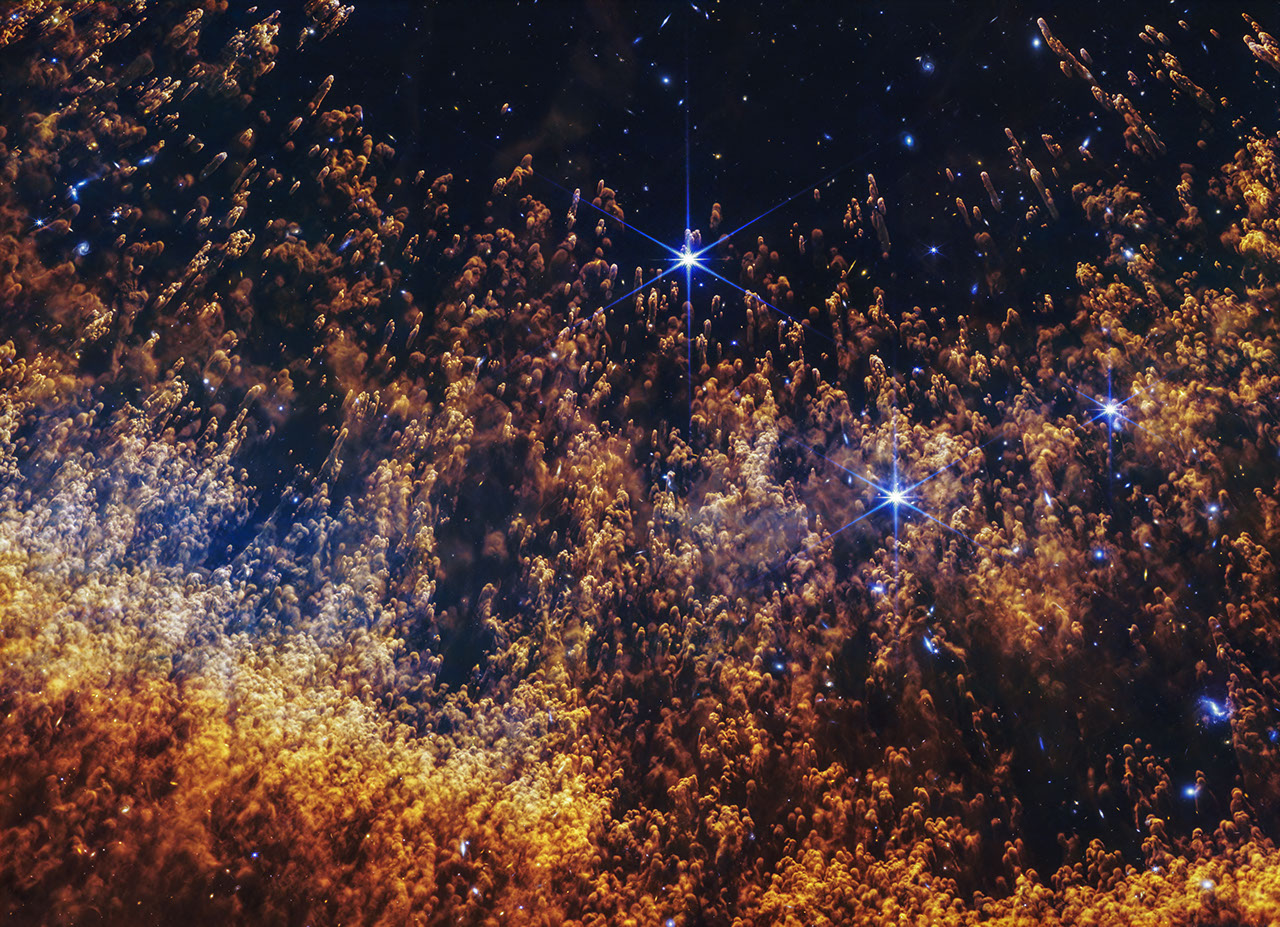
Deep Space Analysis: NGC 7293
Data transmitted via NASA Breaking News reveals a high-resolution examination of the Helix Nebula (NGC 7293), focusing on the anomalous structures known as 'cometary knots.' Located approximately 700 light-years away in the constellation Aquarius, the Helix Nebula serves as a primary case study for the final evolutionary stages of Sun-like stars.
Kinetic Fragment Morphology
These cometary knots are not celestial bodies but dense, opaque clouds of molecular gas and dust. Each 'knot' is estimated to be roughly the size of our solar system, yet they possess significant mass, trailing tails that stretch across light-years. According to NASA Breaking News, these structures are formed when a high-speed stellar wind from the central white dwarf collides with the slower-moving shells of gas ejected during the star's red giant phase. This interaction creates an instability, shredding the gas into the distinct, comet-like shapes visible in the infrared and optical spectrums.
Scientific Significance
The persistence of these knots suggests they are resilient to the intense ultraviolet radiation emitted by the central star. For the astrophysics community, the Helix Nebula provides a temporal window into the far future of the Solar System. Approximately five billion years from now, our own Sun is expected to undergo a similar transformation, shedding its outer layers and potentially creating similar gaseous remnants.
Tracing the movement and erosion of these knots allows researchers to map the chemical distribution of the interstellar medium and the mechanics of planetary nebula expansion. The Helix remains one of the closest and most detailed laboratories for observing the end-state of stellar fusion.