HALO: NATO Allies to Integrate Sovereign Orbital Assets
Eight NATO nations have signed an agreement to stitch together disparate national satellite fleets into a unified interoperable layer for defense and intelligence.
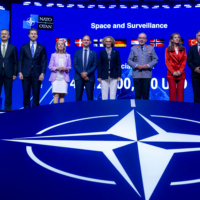
Eight NATO nations are moving to bridge the gap between national sovereignty and collective defense through a new orbital architecture. The Hybrid Alliance Layered Operations in Space (HALO) project aims to integrate the independent satellite constellations of Denmark, Canada, Finland, Germany, Norway, Sweden, Turkey, and the Netherlands into a unified network.
Strategic Convergence
According to Payload, the HALO initiative serves as a technical compromise within the European defense landscape. Historically, EU member states have prioritized sovereign control over sensitive military space infrastructure, leading to a fragmented ecosystem of non-interoperable satellites. HALO allows these nations to retain ownership of their individual assets while establishing the protocols necessary to function as a de facto mega-constellation.
Assessing the Fleet
This integrated layer will focus on high-speed communications, missile tracking, and intelligence-gathering. NATO Deputy Secretary-General Radmila Shekerinska noted the model will help overcome coverage and cost limitations that hamper single-nation fleets. To bridge these gaps, the coalition brings diverse assets to the table:
- Germany: Currently operating ~10 reconnaissance satellites with a roadmap for 1,200 units by 2030.
- Turkey: Controls a fleet of 10+ communications and EO satellites.
- Finland and Netherlands: Recent launches of dedicated military SAR satellites (ICEYE) are rapidly expanding their orbital footprint.
- Scandinavia: Sweden, Norway, and Denmark have accelerated sovereign launches since 2024, involving both polar-orbiting radar and broadband payloads.
Terminal View
By creating a standardized interoperability layer, NATO is shifting away from isolated "boutique" constellations toward a scalable, collaborative defense grid. While the industrial impact remains to be seen, the project signals a hardening of European space policy in an era of contested orbits.