Ground Station Resilience: Wildfires Spare Iberian Deep Space Links
Critical communication infrastructure in Spain operated by NASA and ESA has survived a major wildfire event with minimal damage, though operations at the Madrid complex remain offline.
Operational Status Update
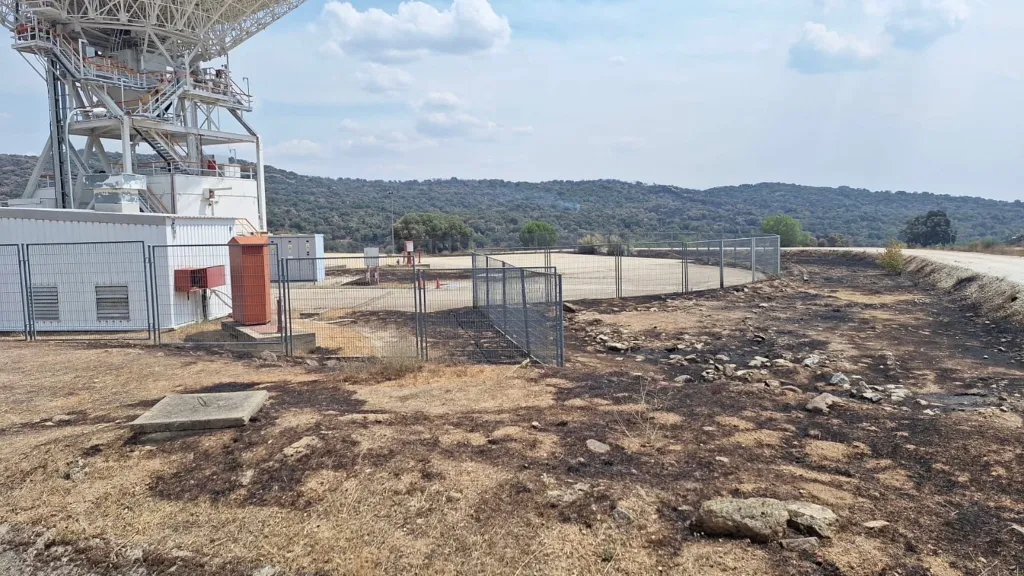
Strategic communications assets in the Madrid region have weathered a significant thermal event. According to SpaceNews, the Madrid Deep Space Communications Complex (MDSCC) and the European Space Agency’s (ESA) Cebreros station have avoided catastrophic structural damage despite being bypassed by intense wildfires on July 24.
Damage Assessment: MDSCC
NASA’s Robledo de Chavela facility, a core node of the Deep Space Network (DSN), underwent emergency evacuation as flames breached the perimeter. Initial inspections on July 25 by internal emergency response teams confirmed that the primary antenna arrays—including the massive 70-meter dish and five 34-meter units—remain intact. Damage is currently confined to surrounding vegetation and pavement infrastructure.
While the hardware is secure, the Madrid site remains non-operational. To maintain link continuity with deep-space assets across the solar system, NASA has activated "follow the sun" protocols, shifting mission control responsibilities entirely to the Goldstone, California, and Canberra, Australia, complexes.
ESA Cebreros Status
Approximately 77 kilometers west of Madrid, ESA’s Cebreros station also reported a narrow escape. Official statements suggest the 35-meter deep-space antenna remains unharmed. However, local authorities have not yet cleared personnel for physical site re-entry, leaving a comprehensive technical diagnostic pending.
Critical Capacity Constraints
The outage at MDSCC arrives at a precarious moment for global space communications. The DSN is already navigating a capacity crisis following a hardware failure at Goldstone’s 70-meter antenna, which is sidelined until 2028. This Iberian fire event highlights the increasing vulnerability of terrestrial ground segments to climate-driven disruptions.