Gerst Archives: Ranking Orbital Operations
ESA astronaut Alexander Gerst provides a data-driven ranking of life aboard the International Space Station, prioritizing extravehicular activity as the peak orbital experience.
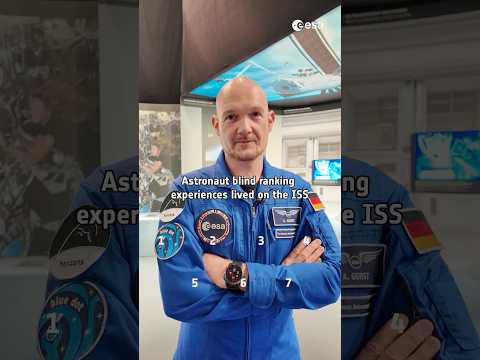
Operational Log: Internal Assessment
In a recent retrospective released via ESA YouTube, astronaut Alexander Gerst—veteran of the Blue Dot and Horizons missions—systematically ranked the core components of his tenure aboard the International Space Station (ISS). The assessment provides a clinical yet profound look at the hierarchies of human spaceflight experience.
At the apex of the list lies Extravehicular Activity (EVA). For Gerst, the physical transition beyond the pressurized hull represents the definitive orbital event. The data is clear: no internal activity replicates the sensory input or technical complexity of a spacewalk. It is classified as the emotional and professional peak of any mission profile.
Following EVA, Gerst prioritized the View of Earth. Observing the planet from the Cupola is more than a leisure activity; it is a critical perspective shift. The astronaut noted the overwhelming scale of terrestrial geography and the atmospheric thinness visible from low Earth orbit (LEO).
Scientific Research was ranked high as the primary objective of his residency. Gerst emphasized that executing experiments in microgravity is the fundamental purpose of the ISS, providing the telemetry needed for terrestrial advancement.
At the lower end of the ranking, yet still essential, were Launch and Reentry. While these phases involve extreme G-loading and mechanical stress, they are transient compared to the long-duration operational phase. Gerst also highlighted Camaraderie, noting that the social fabric of an international crew is the primary fail-safe against the isolation of deep space.
According to ESA YouTube, this ranking serves as a benchmark for future European recruits currently undergoing training at the European Astronaut Centre.