GEO Lifeline: SpaceX Deploys Northrop’s Mission Robotic Vehicle
SpaceX has launched Northrop Grumman’s Mission Robotic Vehicle to install propulsion pods on aging geostationary satellites, marking a shift toward scalable orbital servicing.
Orbital Logistics Shift
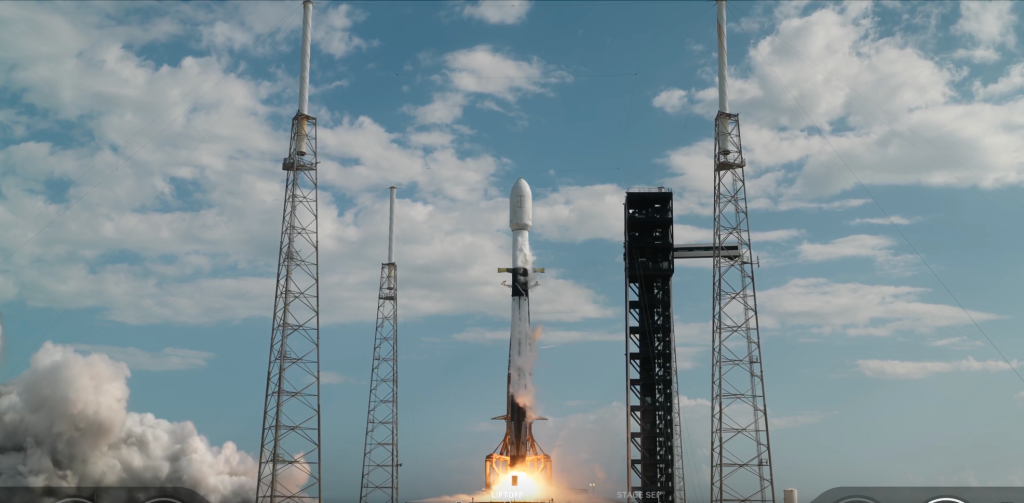
On July 21, a SpaceX Falcon 9 lifted off from Cape Canaveral, delivering a high-stakes payload to Geosynchronous Transfer Orbit (GTO). According to SpaceNews, the mission carried Northrop Grumman’s Mission Robotic Vehicle (MRV) and three Mission Extension Pods (MEP). To achieve the velocity required for the heavy quartet, the Falcon 9 booster utilized its full performance, precluding a landing attempt. This deployment marked the tactical retirement of the booster after a record 32 successful flights.
The Mechanics of Life Extension
Once the MRV and pods reach geostationary orbit (GEO) via their own propulsion, the MRV will utilize two robotic arms to perform precise orbital operations. Rather than refueling targets, the MRV attaches a Mission Extension Pod directly to the structural ring of a client satellite. These pods feature independent electric thrusters, providing the attitude and momentum control necessary to extend a satellite's operational lifespan by approximately six years.
The current manifest includes two pods for Intelsat and one for Australia’s Optus. Unlike earlier iterations like MEV-1 and MEV-2—which stayed attached to single clients—the MRV is a reusable tug designed to install multiple pods over a 15-year lifecycle.
Strategic Origins
The technology is a commercial evolution of DARPA’s Robotic Servicing of Geosynchronous Satellites (RSGS) program. While DARPA funded the robotic hardware, Northrop Grumman financed the spacecraft and commercial integration. The U.S. Space Force has signaled its intent to utilize the MRV as an on-call orbital resource, signaling a move toward a dynamic, serviced orbital environment.