ExoMars Rover Mobility Calibration: Legs Deployment Complete
According to ESA, the ExoMars rover has successfully completed critical locomotion tests, deploying its landing gear in a final verification of its deep-space mechanical readiness.
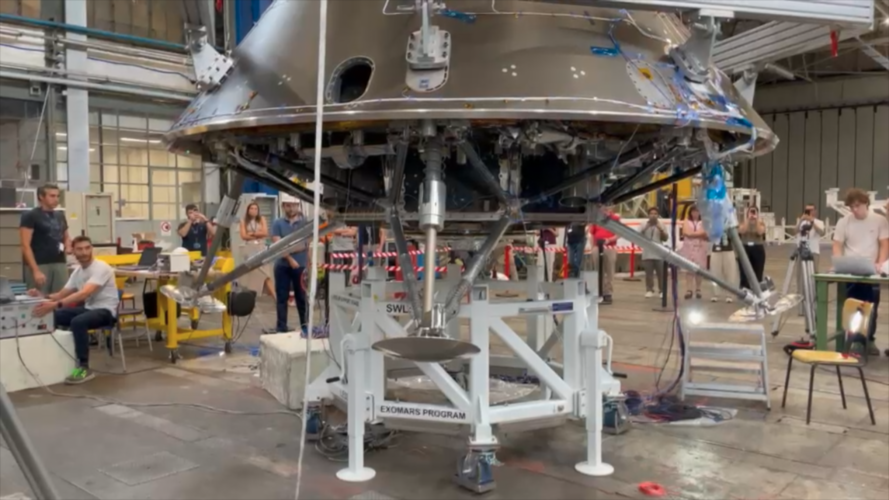
SYSTEM DIAGNOSTICS: MOBILITY CHECK
The ExoMars rover—Europe’s flagship explorer designed to hunt for signs of life on the Red Planet—has achieved a critical hardware milestone. According to ESA, the mission team has successfully performed a complete deployment of the rover's mobility system, effectively allowing the vehicle to "stretch its legs" in a controlled testing environment.
MECHANICAL SEQUENCING
The operation verified the intricate deployment mechanism required to transition the rover from its stowed launch configuration into its operational surface state. This procedure is a high-stakes maneuver; once the rover reaches the Martian surface, these legs must articulate perfectly to support the 310kg laboratory. The testing phase confirms that the actuators, joints, and locking mechanisms are performing within nominal parameters.
MISSION CONTEXT
This locomotion test is a fundamental prerequisite for the mission's next phases. According to ESA engineers, the rover utilizes a unique "triple-bogie" suspension system. This design is engineered to navigate the treacherous, rock-strewn terrain of Oxia Planum, the primary landing site. Unlike previous stationary landers, the ExoMars rover is built for range, carrying a drill capable of penetrating two meters into the Martian subsurface—where organic material may be shielded from harsh surface radiation.
With the legs successfully extended and the mobility drive verified, the mission moves one step closer to its delayed launch window. The data gathered during this "stretch" ensures that the mechanical stresses of deployment will not compromise the rover's sensitive scientific payload once it touches down on the fourth planet.