Euclid Identifies Relic Quasars from Cosmic Dawn
The ESA’s Euclid space telescope has successfully identified high-redshift quasars originating from the first billion years of the universe, providing critical data on early black hole growth.
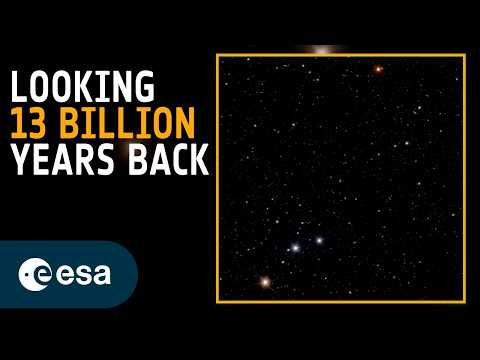
Deep Space Survey Results
The European Space Agency’s Euclid mission has achieved a significant milestone in its primary mission to map the geometry of the dark universe. According to reporting from the ESA YouTube channel, the telescope has successfully identified some of the most ancient quasars ever observed. These luminous objects, powered by supermassive black holes, date back to the first billion years of the universe's existence.
Analytical Significance
Quasars serve as critical beacons for astrophysicists. Because they are exceptionally bright, they allow for the study of the intergalactic medium and the chemical composition of the early cosmos. The discovery by Euclid provides a statistically significant sample of these high-redshift objects, which is essential for understanding how supermassive black holes could reach such immense masses so shortly after the Big Bang.
Unlike previous surveys, Euclid’s wide-field capabilities allow it to scan vast areas of the sky with the sensitivity required to distinguish these distant targets from foreground stars. This capability is vital for reconstructing the timeline of reionization—the process by which the first stars and galaxies cleared the cosmic fog of neutral hydrogen.
Future Trajectory
This data release confirms that Euclid’s Near-Infrared Spectrometer and Photometer (NISP) is functioning within expected parameters for deep-field observation. As the mission continues its six-year survey, the density of identified ancient quasars is expected to increase, further refining our models of early galactic evolution and the distribution of dark matter across cosmic time.