ESOC CONDUCTS SYNCHRONIZED DUAL-MISSION LAUNCH DRILLS
ESA mission control completes intensive simulations for the simultaneous deployment of FLEX and Copernicus Sentinel-3C, marking a significant operational milestone at ESOC.
Operational Readiness Analysis
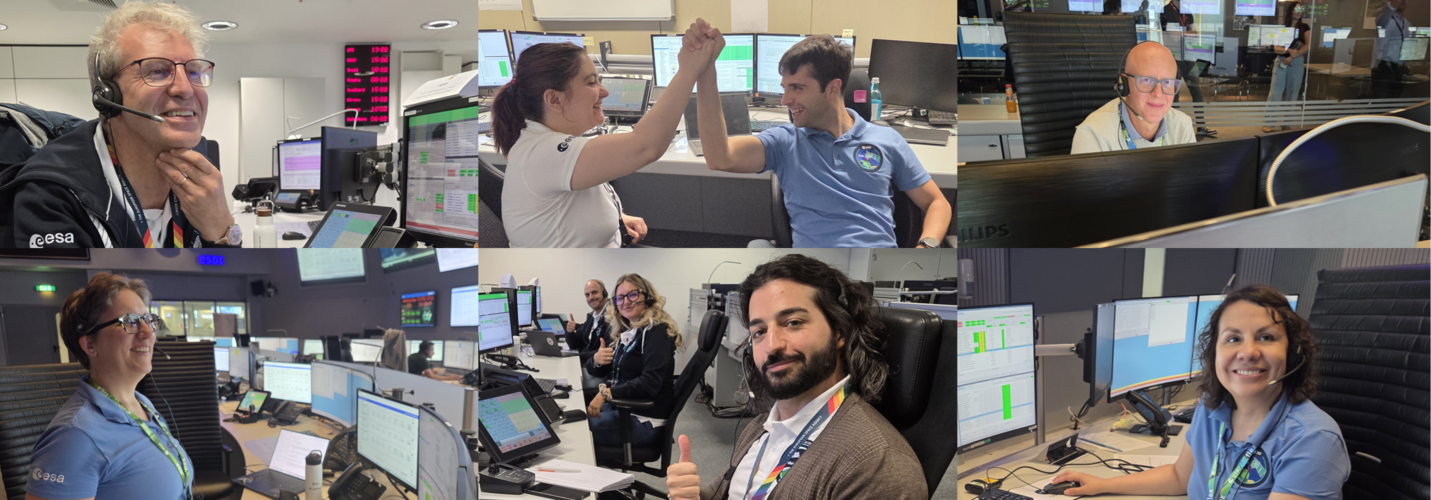
Engineers at the European Space Operations Centre (ESOC) in Darmstadt, Germany, have entered the final stages of simulation for a complex orbital deployment. For the first time, ESA mission control is preparing to handle the simultaneous Launch and Early Orbit Phase (LEOP) of two distinct satellites: the Fluorescence Explorer (FLEX) and Copernicus Sentinel-3C.
According to ESA, this dual-mission strategy requires a "team of teams" approach, necessitating unparalleled coordination between flight control, ground station networks, and flight dynamics experts. The simulation campaign is designed to stress-test these protocols, forcing personnel to manage telemetry streams and hardware commands for two spacecraft concurrently.
Strategic Mission Objectives
- FLEX: A specialized mission dedicated to mapping global vegetation health by detecting the faint fluorescence emitted by plants during photosynthesis.
- Sentinel-3C: Part of the Copernicus program, this satellite will provide high-precision data on sea-surface temperature, ocean color, and land topography, ensuring data continuity for environmental monitoring.
Simulation Parameters
During these rehearsals, the Main Control Room at ESOC is divided into specialized cells. The "simulations officer" introduces artificial anomalies—ranging from ground station failures to onboard power fluctuations—to ensure the flight teams can maintain mission integrity under pressure. Success in these drills is a prerequisite for the live launch, validating that the infrastructure and human controllers can mitigate risks during the critical initial hours after separation from the launch vehicle. By consolidating these launches, ESA maximizes operational efficiency while maintaining the rigorous safety standards required for European orbital assets.