ESCAPADE TWINS LOCK INTERPLANETARY TRAJECTORY
NASA’s dual-spacecraft ESCAPADE mission has successfully completed its powered Earth flybys, achieving the necessary velocity to begin its transit toward the Martian magnetosphere.
STATUS: TRANSIT COMMENCED
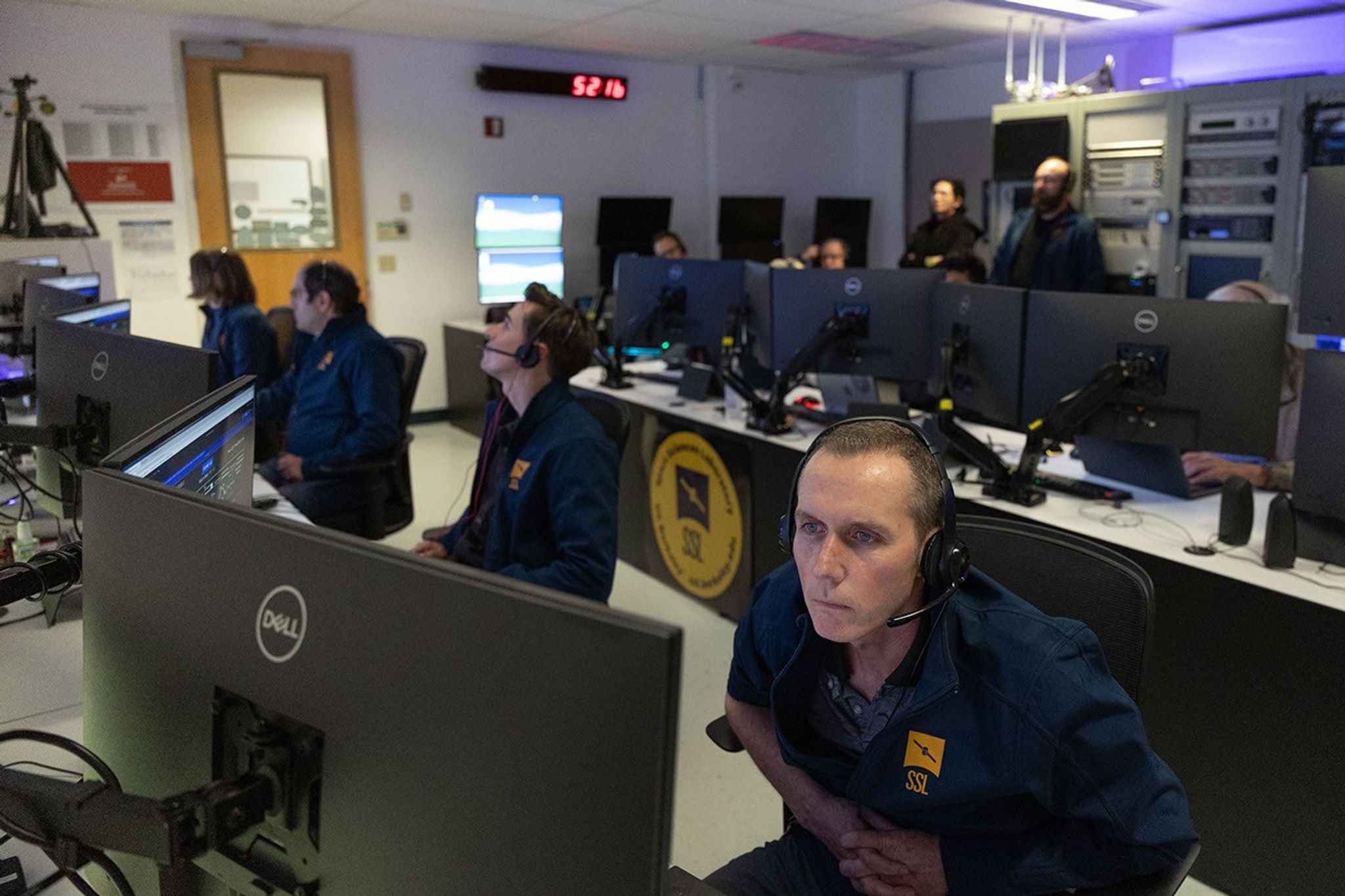
NASA’s twin Escape and Plasma Acceleration and Dynamics Explorers (ESCAPADE) have successfully transitioned from Earth-bound maneuvers to a Mars-bound trajectory. According to NASA Breaking News, the dual spacecraft completed a series of critical powered flybys of Earth, utilizing the planet's gravitational well to slingshot toward the Red Planet.
MISSION PROFILE: THE MAGNETOSPHERE DUALITY
The mission, part of NASA’s heliophysics portfolio, consists of two identical satellites designed to operate in tandem. Their objective is to investigate the complex interactions between the solar wind and Mars’ unique magnetosphere. By utilizing two observation points simultaneously, ESCAPADE will provide high-resolution data on how the Martian upper atmosphere is stripped away by solar radiation.
TECHNICAL EXECUTION
The powered flybys represent the final phase of the mission’s departure sequence. Navigation teams confirmed that the orbital burns executed during the Earth swing-by provided the precise delta-v required for the interplanetary cruise. The spacecraft are now operating autonomously in their transit configuration, with all primary subsystems reporting nominal telemetry.
NEXT PHASE: MARS ORBIT INSERTION
Upon arrival at Mars, the twins will enter elliptical orbits to begin their science phase. This mission is a significant milestone for cost-effective, multi-platform planetary exploration, demonstrating that small-satellite pairs can execute complex interplanetary maneuvers previously reserved for flagship-class hardware. Data acquisition is expected to commence immediately following Mars orbit insertion.