ESA VISUAL LOG: JULY 06-10, 2026
A summary of European space operations, featuring long-range Antarctic ice shelf monitoring via Sentinel-1 and advanced deep-space imaging of Centaurus A.
Operational Status Update
The European Space Agency (ESA) has released its visual ledger for the period of July 06-10, 2026, documenting significant progress in both planetary observation and deep-space telemetry.
//Cryosphere Monitoring: Scar Inlet
According to ESA, comparative interferometry data has yielded a significant 30-year analysis of the Scar Inlet Ice Shelf. By utilizing Copernicus Sentinel-1 satellites operating in tandem, mission controllers have mapped ice flow developments. The latest imagery contrasts 1995 data with 2026 observations, providing a critical delta in velocity and structural integrity of Antarctic ice shelves. This dual-satellite configuration allows for the high-precision phase measurements required to track slow-moving geological and cryospheric shifts.
//Deep Space Visualization: Centaurus A
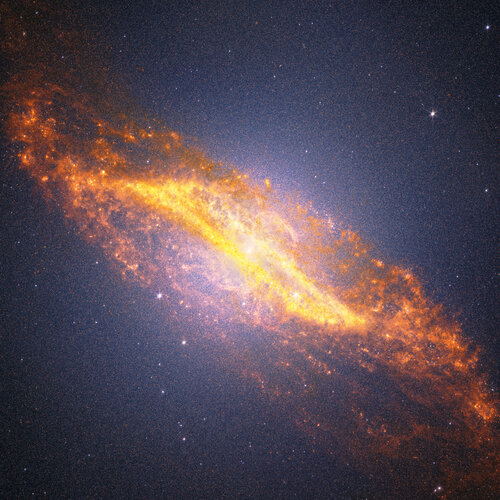
Further out in the sector, the agency highlighted new composite imagery of the galaxy Centaurus A. The data combines inputs from the Mid-Infrared Instrument (MIRI) and the Near-Infrared Camera (NIRCam). This multi-spectrum approach pierces through dense cosmic dust to reveal the active galactic nucleus and star-forming regions with unprecedented clarity.
//Institutional Developments
In administrative shifts reported via Press Release N° 5–2026, Laurent Jaffart has been officially appointed as the Director of Resilience, Navigation, and Connectivity. This leadership move coincides with the agency's continued focus on strengthening its 23-member state infrastructure.
Technical oversight remains centralized across major hubs, including ESTEC for technology development and ESOC for mission control. All systems remain nominal as the agency continues its mission to secure Europe's gateway to orbital and deep-space domains.