ESA’s photosynthesis satellite fuelled
Europe’s newest eye on the health of Earth’s vegetation has taken another crucial step towards orbit – the European Space Agency’s FLEX satellite has been fuelled at Europe’s Spaceport in French Guiana ahead of its planned launch on 15 September at 03:21 CEST (14 September at 22:
We use cookies which are essential for you to access our website and/or to provide you with our services, enable you to share our website content via your social media accounts and allow us to measure and improve the performance of our website.
Accept all cookies Accept only essential cookies See our Cookie Notice
!ESA menu toggle!ESA search toggle!ESA title

About ESA
The European Space Agency (ESA) is Europe’s gateway to space. Its mission is to shape the development of Europe’s space capability and ensure that investment in space continues to deliver benefits to the citizens of Europe and the world.
Highlights
Careers \\
\\
 Business with ESA\\
\\
 Newsroom\\
\\
 Education\\
\\
 Kids\\
\\
 ESA Space Shop\\
\\

ESA - United space in Europe
This is ESA ESA facts Member States & Cooperating States Funding Director General Top management For Member State Delegations European vision European Space Policy ESA & EU Space Councils Responsibility & Sustainability Annual Report Calendar of meetings Corporate news
Establishments & sites
ESA Headquarters ESA ESTEC ESA ESOC ESA ESRIN ESA EAC ESA ESAC Europe's Spaceport ESA ESEC ESA ECSAT Brussels Office Washington Office
Working with ESA
Business with ESA ESA Commercialisation Gateway Law at ESA Careers Cyber resilience at ESA IT at ESA Newsroom Partnerships Merchandising Licence Education Open Space Innovation Platform Integrity and Reporting Administrative Tribunal Health and Safety
More about ESA
History ESA Historical Archives Exhibitions Publications Art & Culture ESA Merchandise Kids Diversity ESA Brand Centre
Latest
Story\\
\\

Focus on\\
\\

Press ReleaseN° 5–2026\\
\\
Open
Space in Member States
Find out more about space activities in our 23 Member States, and understand how ESA works together with their national agencies, institutions and organisations.
                      
Science & Exploration
Exploring our Solar System and unlocking the secrets of the Universe
Programmes
Space Science Human and Robotic Exploration
Astronauts
Sophie Adenot\\
\\
 Pablo Álvarez Fernández\\
\\
 Rosemary Coogan\\
\\
 Samantha Cristoforetti\\
\\
 Alexander Gerst\\
\\
 Raphaël Liégeois\\
\\
 Matthias Maurer\\
\\
 Andreas Mogensen\\
\\
 Luca Parmitano\\
\\
 Thomas Pesquet\\
\\
 Marco Sieber\\
\\

Missions
Juice Euclid Webb Solar Orbiter BepiColombo Gaia ExoMars Cheops Exoplanet missions More missions
Activities
International Space Station Orion service module Gateway Concordia Caves & Pangaea Benefits/videos)
Latest
Story\\
\\

Press ReleaseN° 49–2024\\
\\
Open
Focus on\\
\\

Space Safety
Protecting life and infrastructure on Earth and in orbit
About space safety
Protecting our Pale Blue Dot Space Safety at ESA
Asteroids
Asteroids and Planetary Defence Asteroid danger explained Flyeye telescope: asteroid detection Hera mission: asteroid deflection Near-Earth Object Coordination Centre
Space junk
About space debris Space debris by the numbers Space Environment Report In space refuelling, refurbishing and removing
Safety from space
Clean Space Ecodesign Zero Debris Technologies Space for Earth Supporting Sustainable Development
Space weather
Space weather and its hazards ESA Vigil: providing solar warning ESA Space Weather Service Network
Latest
Story\\
\\

Focus on\\
\\

Applications
Using space to benefit citizens and meet future challenges on Earth
Observing the Earth
Observing the Earth Future EO Copernicus Meteorology Space for our climate Satellite missions
Connectivity
Connectivity and Secure Communications ARTES Moonlight Civil security from space
Satellite navigation
Satellite navigation Galileo EGNOS NAVISP Genesis Celeste
Commercialisation
ESA Commercialisation Gateway Open Space Innovation Platform Business Incubation ESA Space Solutions
Latest
Story\\
\\

Press ReleaseN° 1–2024\\
\\
Open
Focus on\\
\\

Enabling & Support
Making space accessible and developing the technologies for the future
Building missions
Space Engineering and Technology Test centre Laboratories Concurrent Design Facility Shaping the Future Discovery and Preparation Advanced Concepts Team ESA Young Professionals Satellites
Space transportation
Space Transportation Ariane Vega Space Rider Future space transportation Boost! Europe's Spaceport Launches from Europe's Spaceport from 2012
Flying missions
Operations ESA ground stations Ground Systems Engineering
Latest
Story\\
\\

Focus on\\
\\

Press ReleaseN° 8–2024\\
\\
Open
Europe’s newest eye on the health of Earth’s vegetation has taken another crucial step towards orbit – the European Space Agency’s FLEX satellite has been fuelled at Europe’s Spaceport in French Guiana ahead of its planned launch on 15 September at 03:21 CEST (14 September at 22:21 local time).
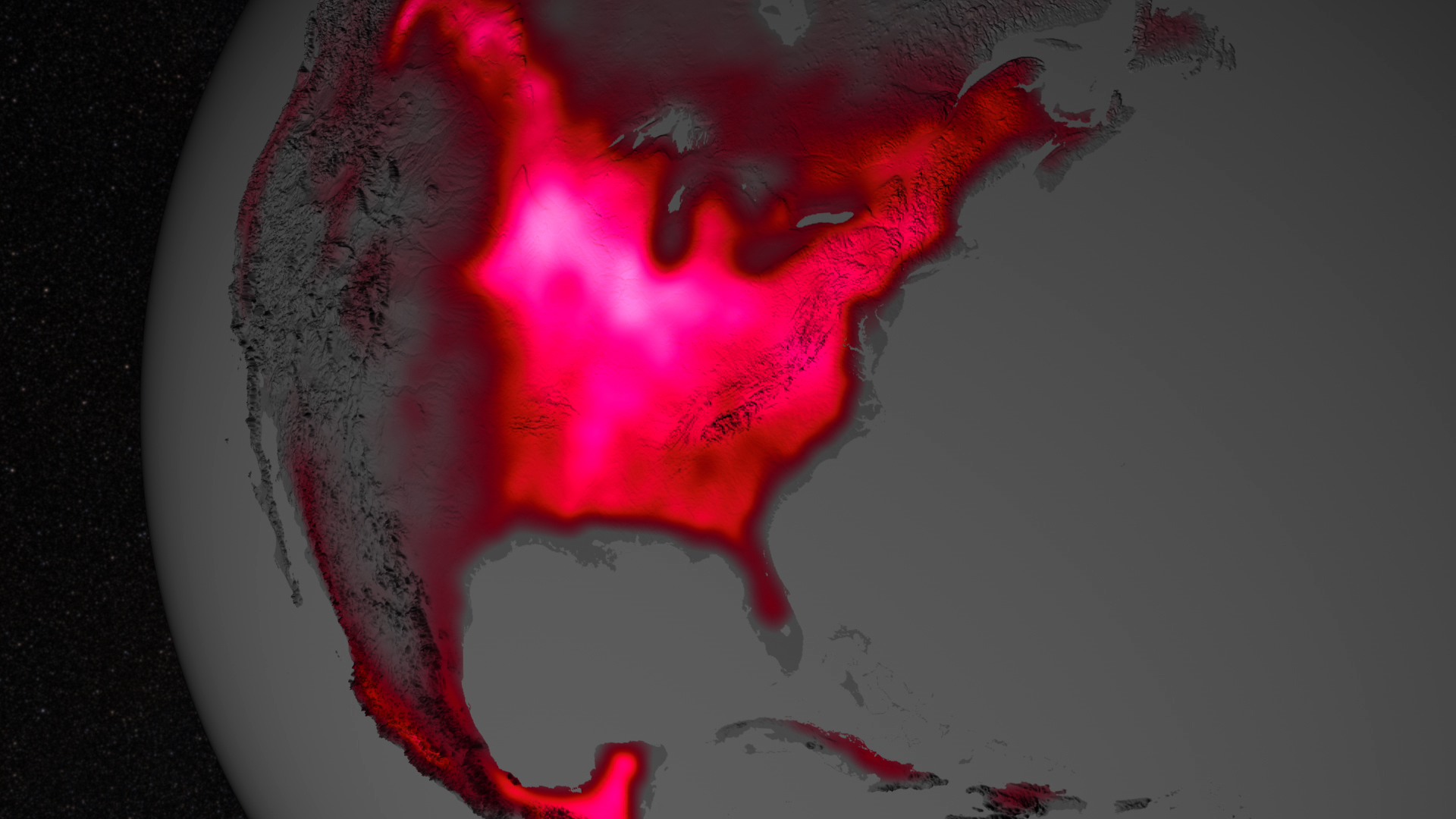
Once launched and commissioned, this latest ESA Earth Explorer research satellite, equipped with its Fluorescence Imaging Spectrometer, will provide new insights into the health of the world’s plants by measuring the faint glow of fluorescence emitted as they capture light for photosynthesis.
This signal, invisible to the naked eye, varies with environmental conditions and plant health, enabling scientists to detect vegetation stress before it becomes apparent on the ground.
FLEX will deliver the first global maps of vegetation fluorescence at a spatial resolution of 300 m × 300 m, providing a new way to assess photosynthetic activity. These data will improve understanding of how carbon moves between plants and the atmosphere, and how photosynthesis drives the carbon and water cycles.
FLEX brings plant health into focus
The stakes are high. Photosynthesis is one of the planet’s most important natural processes, underpinning food production and absorbing huge quantities of carbon dioxide from the atmosphere. Yet scientists still have significant gaps in their understanding of how vegetation responds to drought, heat, changing rainfall and other environmental stresses.
FLEX is intended to help close that gap.
The FLEX satellite arrived in French Guiana in mid-July, together with the Copernicus Sentinel-3C satellite, after a two-week voyage by sea from Nice, France. At Europe’s Spaceport, engineers have been carrying out inspections and preparations to ready both satellites for liftoff aboard a Vega-C rocket in the early hours of 15 September.
For FLEX, the latest milestone was the hazardous and delicate process of loading the satellite with 30 kg of highly volatile fuel. This propellant will allow FLEX to perform manoeuvres after separation from the rocket and throughout its planned minimum 3.5-year mission, during which it will observe at least three seasonal vegetation cycles in both the northern and southern hemispheres.
Fuelling is an extremely hazardous operation and takes place under strict safety procedures, carried out by a highly specialised team.
Frank de Bruin, ESA’s Launch Campaign Manager for FLEX, said, “Preparations to ready our satellite for launch have been going very well here at Europe’s Spaceport and I thank everyone involved. For fuelling, everyone apart from the fuelling experts left the cleanroom for safety reasons. Everything went according to plan and FLEX is now fully loaded. The next steps involve installing FLEX on its launcher adapter before encapsulating it into lower position of the Vega-C rocket fairing.”
Safey is paramount when fuelling a satellite
Although FLEX and Sentinel-3C will be launched together, FLEX will initially fly in tandem with the Sentinel-3A satellite. This will provide complementary measurements of clouds, aerosols and water vapour, alongside information about the land surface, including surface temperature, land-cover type and additional vegetation parameters. Together, these near-simultaneous observations will provide an unprecedented view of the function and condition of vegetation across the globe.
FLEX in tandem with Sentinel-3
After years of design, construction and testing, and with now its fuel tanks now filled, FLEX is almost ready to fly.
Related Articles
Story\\
\\

Story\\
\\

Related Links
Focus on\\
\\

Mission\\
\\

Mission\\
\\

Focus on\\
\\
