ESA Opens Hera On-Board Computer for External Software Testing
The European Space Agency is inviting developers to deploy and test experimental code on the Hera asteroid mission's flight hardware as it journeys through deep space.
Terminal Access: Deep Space Execution
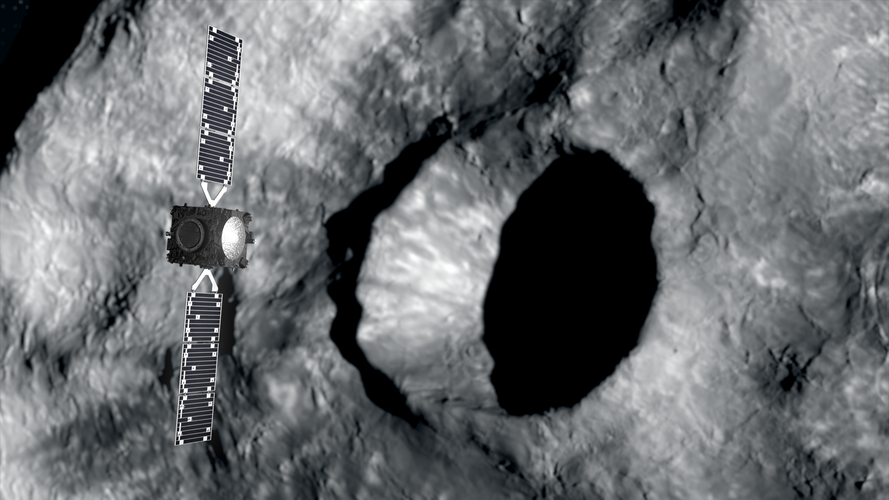
The European Space Agency (ESA) has issued a call for software developers and researchers to execute custom code on the Hera asteroid mission. This initiative offers a rare opportunity to run experimental algorithms on flight-grade hardware currently navigating the interplanetary medium. According to ESA, the goal is to leverage the mission's transit phase to validate advanced software concepts in a genuine deep-space environment.
The Hardware Profile
The target platform is Hera’s on-board computer (OBC), which is responsible for the spacecraft’s primary command and data handling. Participants can utilize the system’s spare processing capacity to test software related to:
Autonomous navigation and image processing.
Data compression and telemetry optimization.
* AI-driven anomaly detection.
While Hera’s primary mission is to investigate the aftermath of the DART impact on the Dimorphos asteroid, the long cruise duration provides an ideal window for these software experiments. According to ESA officials, this "open-source" approach to mission hardware aims to foster innovation within the European space sector and test the limits of remote edge computing.
Operational Parameters
Security is paramount. All submitted code will undergo rigorous sandboxing and ground-based testing before being uplinked to the spacecraft. ESA will provide a software development kit (SDK) and a simulator environment to ensure compatibility with the spacecraft’s real-time operating system. This program marks a shift toward more flexible, software-defined mission architectures, allowing the agency to evolve a spacecraft’s capabilities long after the launch sequence is complete.