ESA Contracts Don Quijote CubeSat for Ramses Planetary Defense Mission
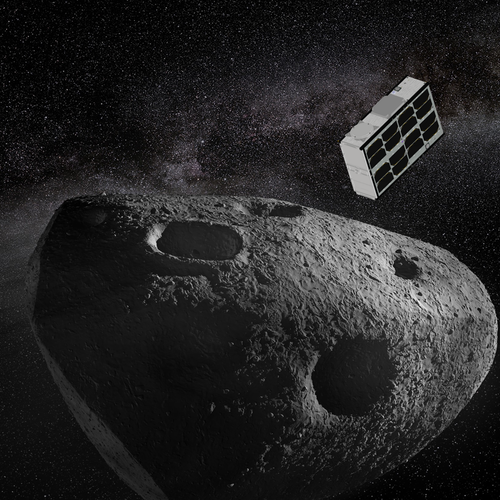
ESA has signed a contract for the development of the Don Quijote CubeSat, a specialized surface probe designed to land on asteroid Apophis as part of the rapid-response Ramses mission.
Mission Protocol: Ramses
The European Space Agency (ESA) has officially moved into the hardware development phase for its rapid-response planetary defense initiative. According to ESA, a contract has been signed for the development of the Don Quijote CubeSat, a secondary payload for the Rapid Apophis Mission for Space Safety (Ramses).
The mission is a high-priority intercept planned for the 2029 close approach of the asteroid Apophis. The asteroid, measuring approximately 375 meters across, is expected to pass within 32,000 km of Earth—closer than some geostationary satellites.
Surface Operations and Instrumentation
The Don Quijote CubeSat is engineered for high-risk orbital maneuvers and surface deployment. Its primary objective is to land on the asteroid's surface to conduct direct measurements of its physical properties. According to technical specifications, the CubeSat will carry a suite of scientific instruments to analyze the internal structure and surface composition of Apophis, providing data that terminal orbital observation cannot achieve alone.
ESA reports that this data is critical for understanding the "tidal effects" Earth's gravity will exert on the asteroid during its flyby. By monitoring how the asteroid’s internal structure shifts or reacts to these forces, researchers can refine deflection strategies for future potentially hazardous objects.
Strategic Alignment
This contract marks a significant milestone for Europe’s planetary defense capabilities. Ramses is designed to arrive at Apophis before the flyby, allowing for "before and after" comparisons. The Don Quijote probe provides the terminal telemetry needed to validate asteroid internal modeling, ensuring that if Earth ever faces a legitimate impact threat, the response protocols are backed by physical surface data.