Epsilon Indi Ab: Webb Detects Hidden Super-Jupiter in Local Neighborhood
NASA's James Webb Space Telescope has successfully imaged Epsilon Indi Ab, a cold exoplanet six times more massive than Jupiter, located just 12 light-years from Earth.
Terminal Data Retrieval: Exoplanet Sector
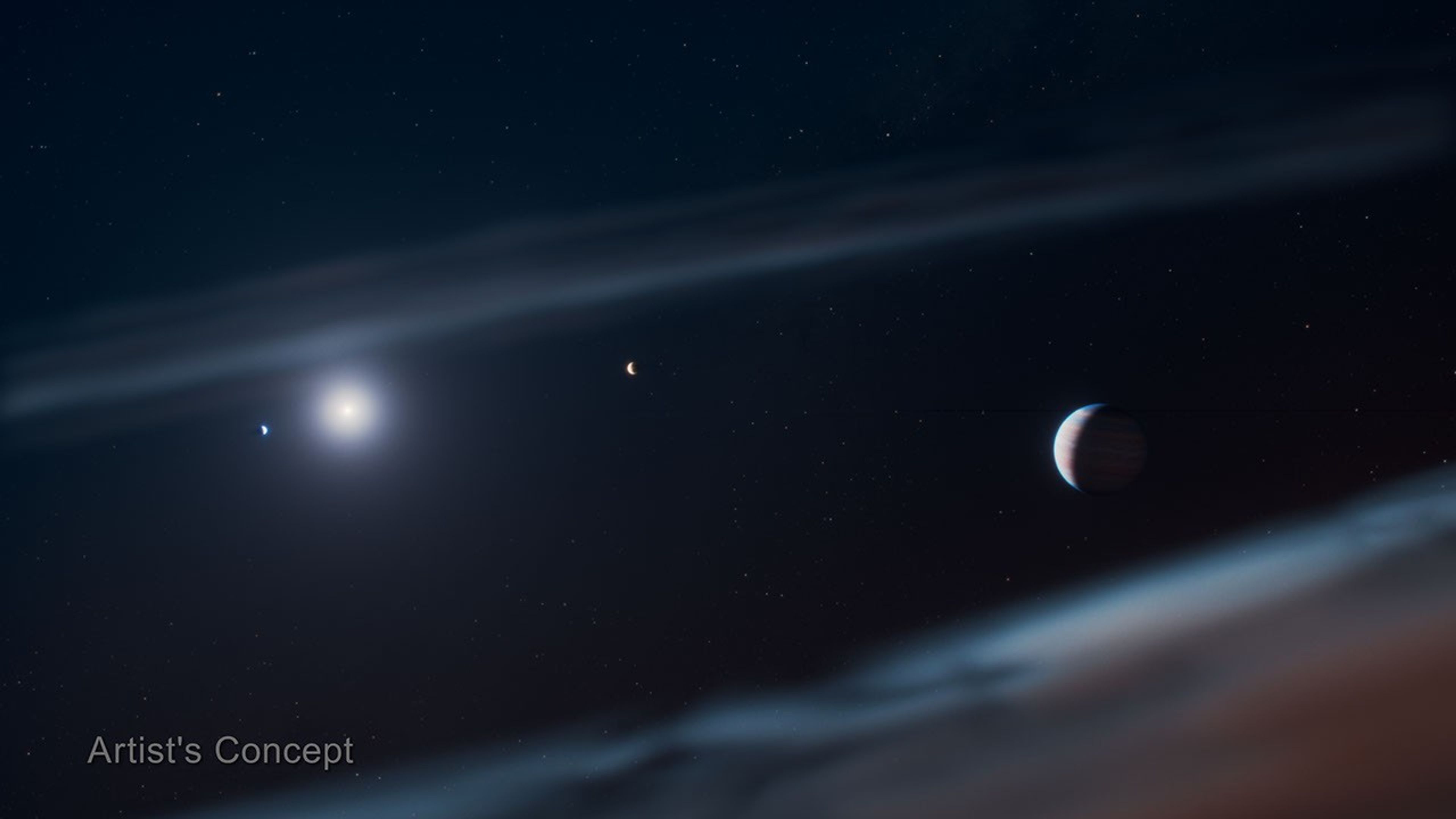
According to NASA Breaking News, the James Webb Space Telescope (JWST) has achieved a significant milestone in direct imaging by identifying a previously hidden exoplanet in the nearby triple star system Epsilon Indi. Designated as Epsilon Indi Ab, the body is a gas giant located approximately 12 light-years from Earth.
//Technical Specifications
Data processed from Webb’s Mid-Infrared Instrument (MIRI) reveals a world roughly six times more massive than Jupiter. Unlike many previously imaged exoplanets, Epsilon Indi Ab is exceptionally cold, with an estimated temperature of 2 degrees Celsius (35 degrees Fahrenheit). This makes it one of the coldest exoplanets ever observed through direct imaging, bridging the gap between solar system giants and warmer extrasolar bodies.
//Orbital Anomalies
Researchers originally suspected the presence of a planet in this system due to gravitational perturbations detected in the host star. However, the data confirms the planet is further from its star than initial models predicted. It follows an elliptical orbit with a separation distance comparable to that between Saturn and our Sun. This discrepancy highlights the precision of MIRI’s coronagraphic capabilities, which allow it to block out starlight and resolve faint thermal signatures.
//Scientific Impact
This discovery marks a shift from indirect detection methods—like the transit or radial velocity techniques—toward high-fidelity direct imaging in the mid-infrared spectrum. The ability to observe such a cold, mature planet provides a new template for atmospheric studies of worlds that do not rely on internal heat from recent formation. The proximity of Epsilon Indi Ab ensures it will remain a primary target for spectral analysis in the coming decades.