Edge Computing on the Moon: Lunar Outpost Taps NVIDIA for Autonomous Rovers
Lunar Outpost will utilize NVIDIA's Jetson AI chips and Space-1 Vera Rubin modules to enable autonomous navigation and real-time data processing for upcoming lunar missions.
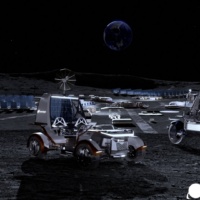
AI Integration at the Lunar Frontier
In a strategic move to bypass the high latency of Earth-to-Moon communications, lunar rover developer Lunar Outpost has announced a partnership to integrate NVIDIA silicon into its upcoming terrestrial-satellite operations. According to Payload, the Colorado-based startup aims to utilize high-performance edge computing to grant its fleet greater autonomy during the final decade of the 2020s.
Mission Timeline and Hardware Deployment
The integration begins with Lunar Voyage 2, scheduled for launch later this year. The mission’s MAPP rover will carry an NVIDIA Jetson AI chip specifically tasked with managing lidar systems and sensor data processing. This onboard computation reduces the need for constant, high-bandwidth downlinks, allowing the vehicle to handle complex environmental data locally.
Following this initial demonstration, Lunar Outpost will scale its capabilities for Lunar Voyages 3 and 5. These later missions will deploy the upgraded Space-1 Vera Rubin module. The hardware is designed to support:
Autonomous Navigation: Real-time pathfinding without human-in-the-loop intervention.
Surface Mapping: Immediate ingestion and analysis of sensor data to create high-resolution lunar maps.
* Media Streaming: Real-time, high-definition video feeds from the lunar surface.
Infrastructure for a Permanent Presence
The objective extends beyond simple exploration. According to Payload, Lunar Outpost is planning ten missions within the decade to assist NASA and international partners in establishing a permanent lunar base. By utilizing NVIDIA's architecture, these rovers can operate independently of astronaut crews, handling logistical tasks and terrain analysis required for long-term habitation. This shift toward localized processing addresses the fundamental bottleneck of lunar operations: the immense difficulty of remote-steering vehicles across a 384,400 km telemetry gap.