Dual-Deployment: FLEX and Sentinel-3C Enter Orbit
ESA secures a critical atmospheric monitoring milestone with the successful orbital deployment of the FLEX mission alongside the latest Copernicus Sentinel-3C hardware.
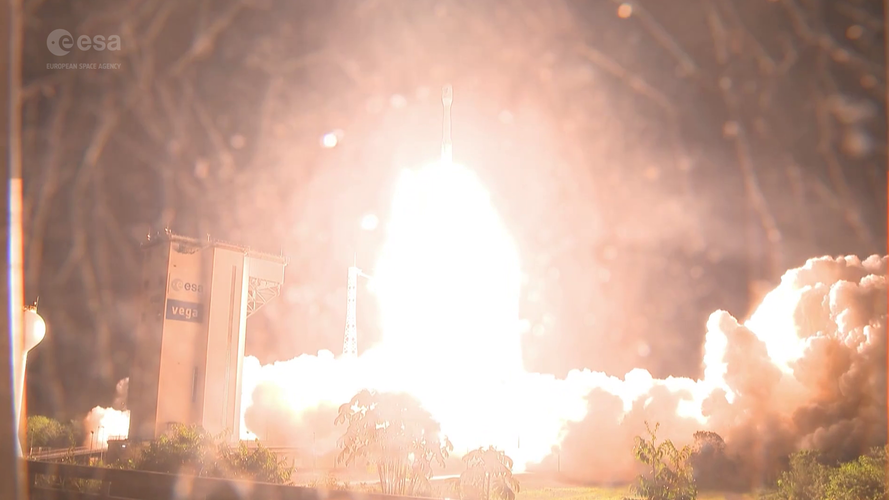
Mission Status: Active
In a synchronized expansion of Europe’s Earth observation architecture, the European Space Agency (ESA) has confirmed the successful launch and deployment of the Fluorescence Explorer (FLEX) and Sentinel-3C orbiters. This mission represents a strategic reinforcement of the Copernicus program and ESA’s broader Earth Explorer scientific mandate.
According to ESA reports, the dual-payload configuration entered its planned trajectory to begin technical commissioning. The FLEX satellite, an Earth Explorer mission, is specifically engineered to measure the faint infrared glow emitted by terrestrial plants during photosynthesis. This data will allow researchers to assess vegetation health and stress levels with unprecedented precision from orbit.
Operational Synergy
While FLEX provides specialized biological spectral analysis, its operation is intrinsically linked to its orbital partner. Sentinel-3C, the latest iteration in the Copernicus Sentinel-3 series, provides a robust suite of instruments—including the Ocean and Land Colour Instrument (OLCI) and the Sea and Land Surface Temperature Radiometer (SLSTR). By flying in tandem with Sentinel-3C, the FLEX mission can leverage high-resolution atmospheric and thermal data to calibrate and contextualize its fluorescence measurements.
This launch underscores ESA’s continued governance of European space capability, ensuring that orbital investments translate into actionable climate and agricultural intelligence for global stakeholders. As the satellites transition into the commissioning phase, ground stations at ESOC and ESRIN are monitoring telemetry to verify subsystem integrity across both platforms.